In the past couple of weeks, some of the larger questions we’ve been tackling include what makes a certain space or element evoke a certain experience or emotion and how different elements of the Built environment accommodate these emotions and responses. To further our understanding on the subject, we were asked to work with vessels from our own homes, a place we know well and now, thanks to covid-19, will be spending most of our time here.
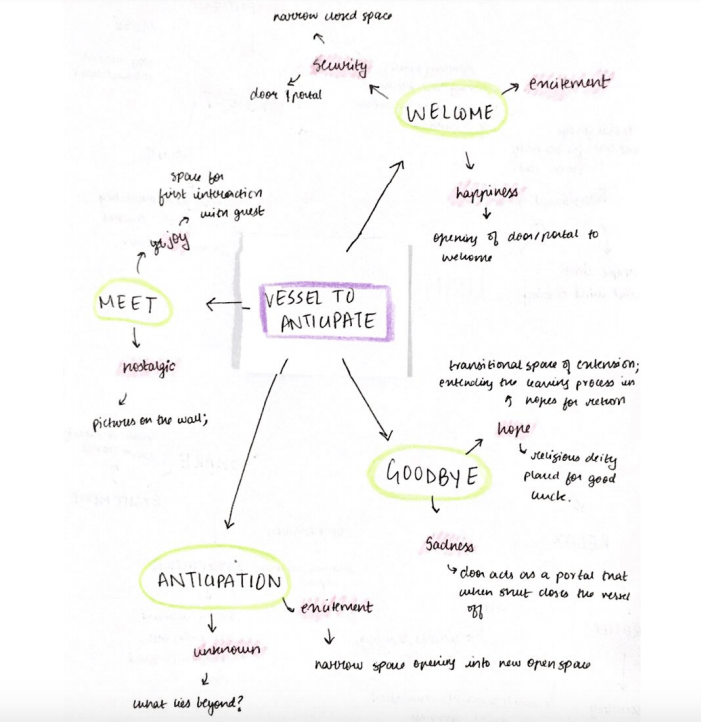
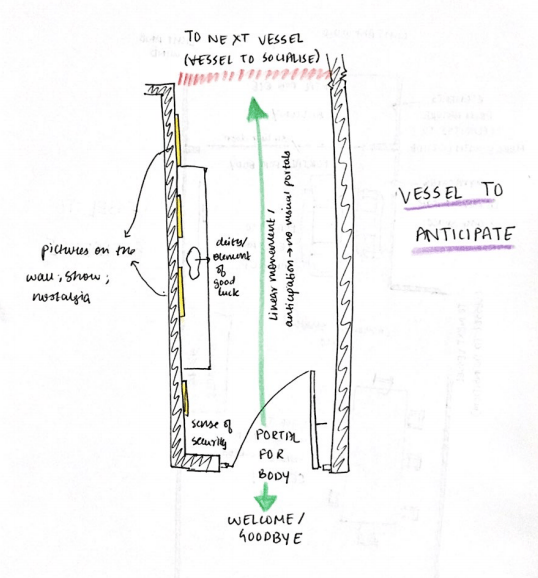
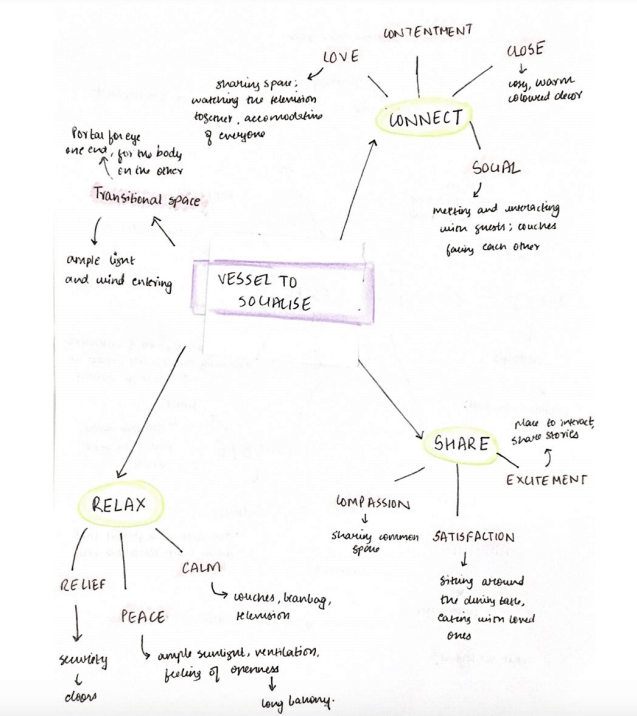
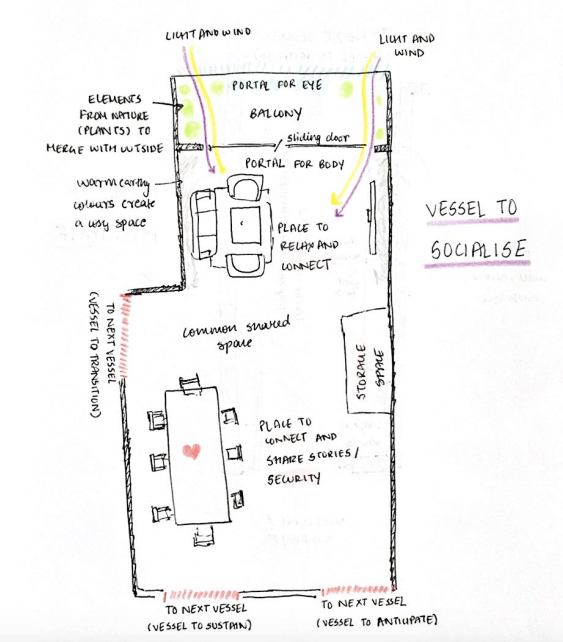
The images below are mind maps indicative of the various emotions, activities and spatial responses alongside the plans for each of the vessels.
The first space in my house is the foyer or the ‘Vessel to Anticipate’ as this is a vessel where people meet, say hello, bid goodbyes and anticipate what is to come next.
Mind map and Plan of Vessel to Anticipate, commonly called a foyer
The next vessel is the Living and Dining Space or the ‘Vessel to Socialise’ as this is the space where people connect, interact and share stories. This is the cosiest and most welcoming room that allows one to relax and engage in conversation.
Mind map and Plan of Vessel to Socialise, commonly called a living/dining area
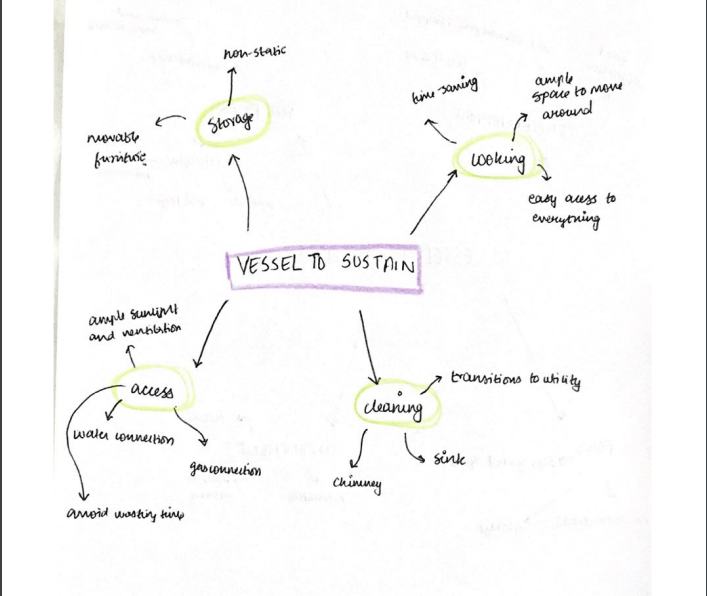
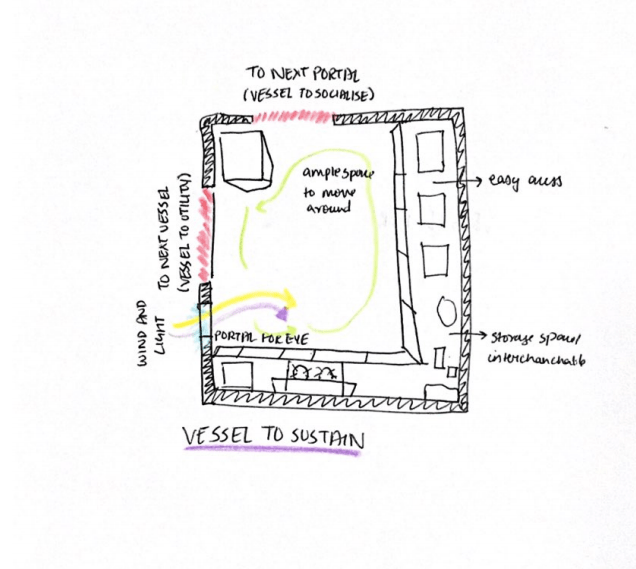
The kitchen or ‘Vessel to Sustain’ is an essential vessel in every household where essentials like food and water can be found; it as a vessel that allows for flow and movement, allowing easy access from the other vessels.
Mind map and Plan of Vessel to Sustain, commonly called a kitchen
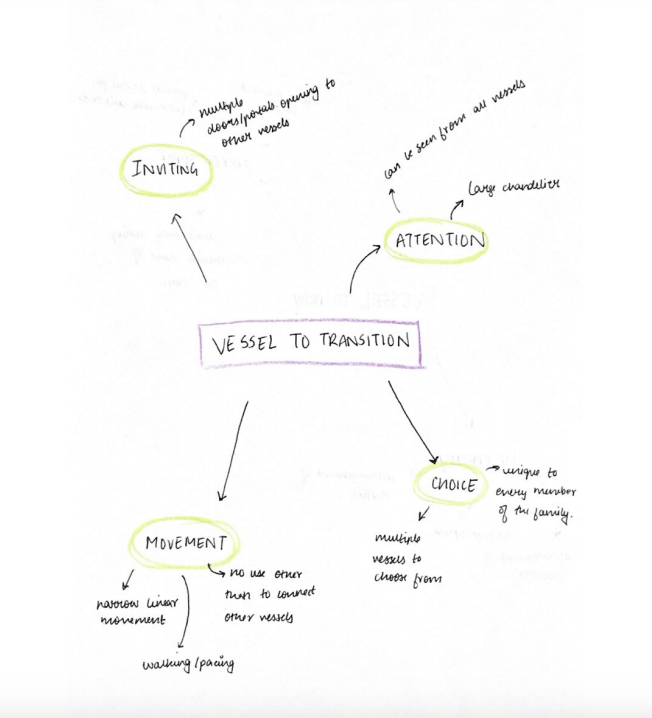
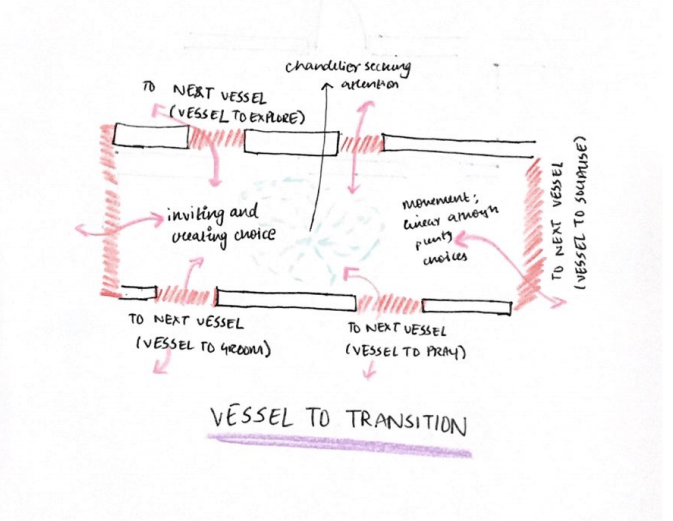
The corridor or ‘Vessel to transition’, although doesn’t have a distinct function of its own other than to transition and allow movement from one vessel to another, acts as an integral part of my home connecting most of the vessel in a narrow but grand spatial arrangement.
Mind map and Plan of Vessel to Transition, commonly called a corridor
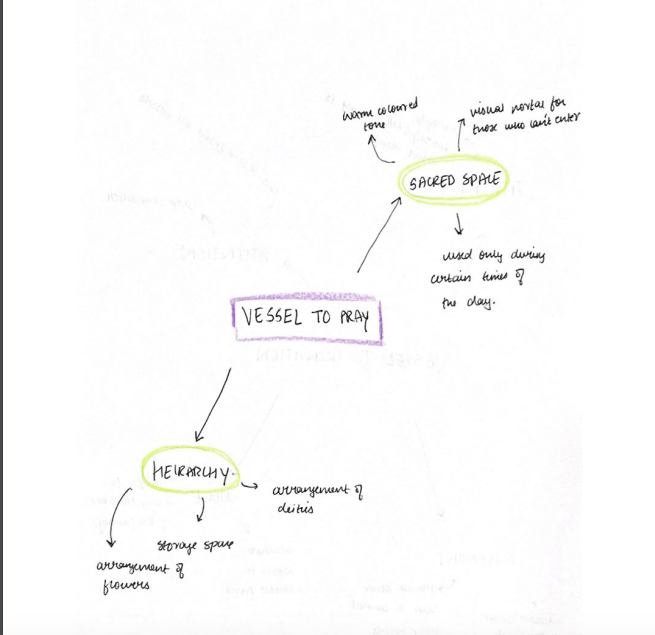
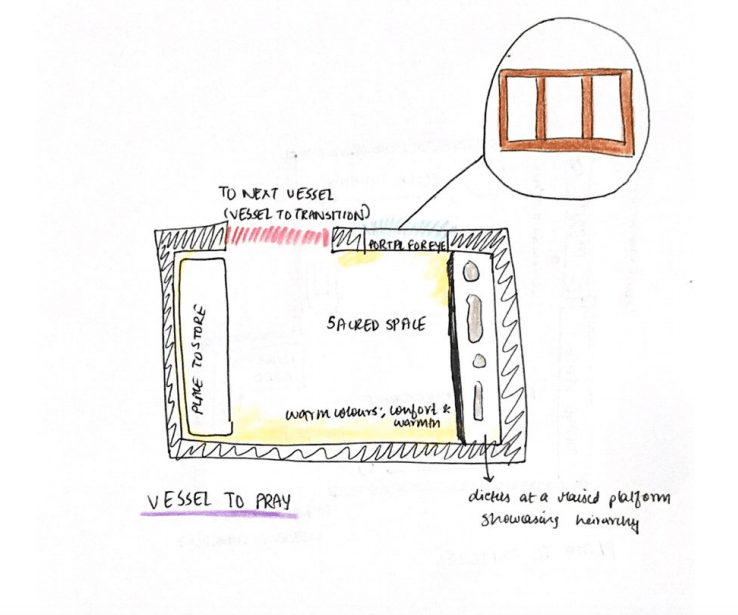
The ‘Vessel to Pray’ is the most sacred part of the house even though it is used the least in terms of day to day activities. Although it is visually easily accessible, the representational space created by superimposing religious practices and beliefs creates barriers and changes in the way the vessel is accessed.
Mind map and Plan of Vessel to pray, commonly called a puja room
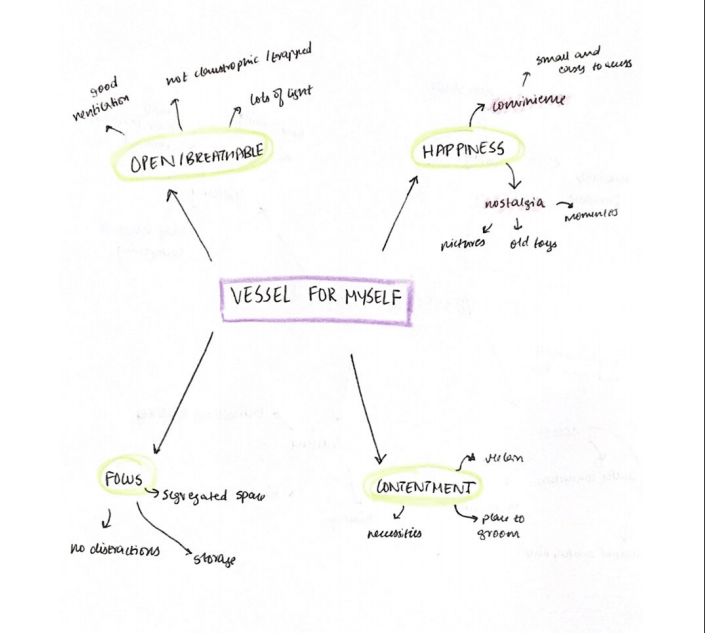
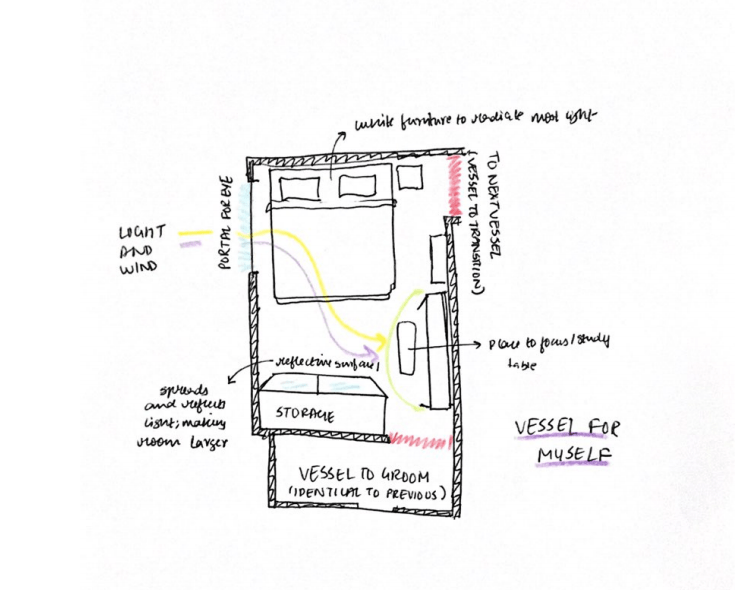
The vessel for myself or the Bedroom is a vessel for me to focus and get work done and have most of my belongings easy to reach. The colour palette for the furniture and walls is white; there is a large mirror that allows light to be reflected in all directions and a long wide window that allows light to come in- all of which allow the vessel to be occupied by someone suffering from claustrophobia.
Mind map and Plan of Vessel for myself, commonly called a bedroom
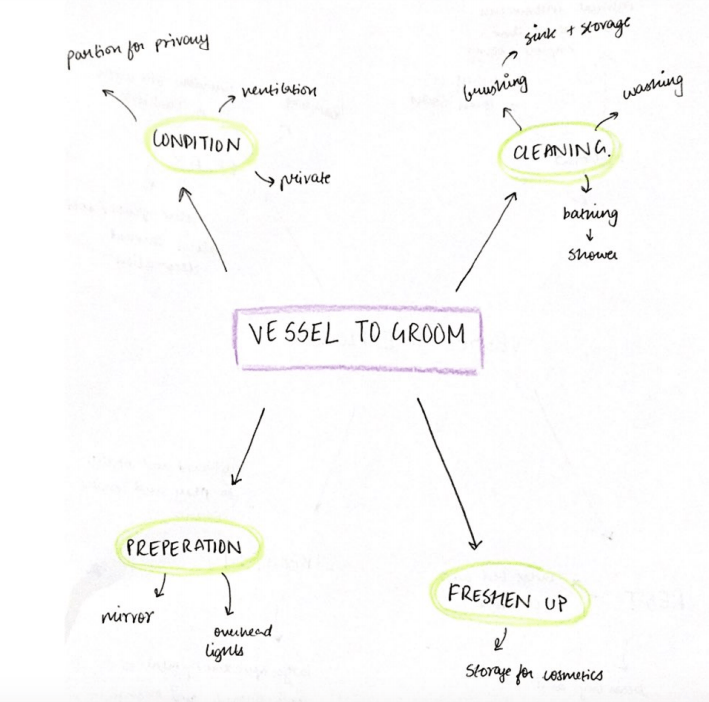
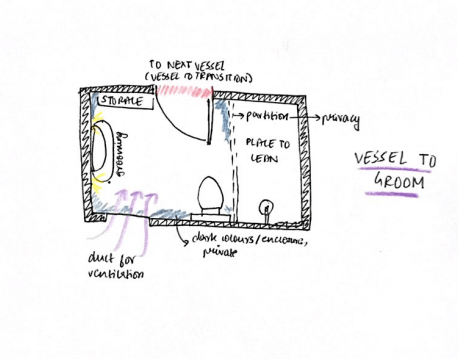
The Vessel to Groom is the vessel to prepare oneself for the day, freshen up after a long day and acts as the most private vessel of the lot.
Mind map and Plan of Vessel to Groom, commonly called a washroom
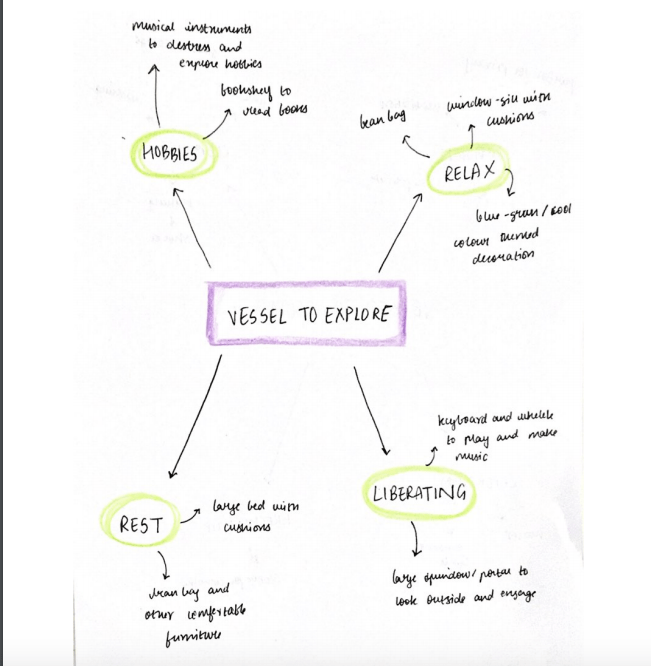
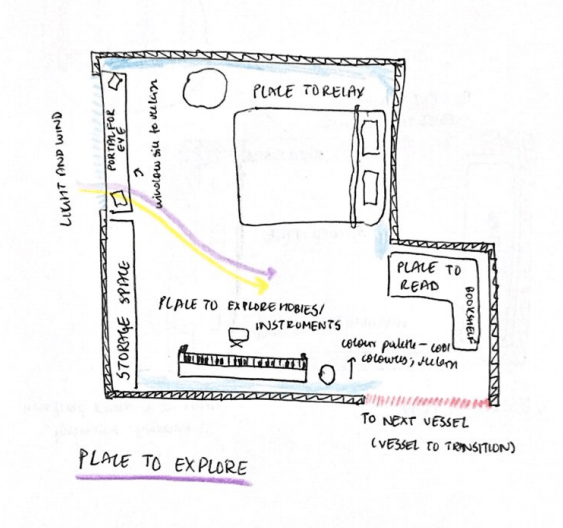
The ‘Vessel to Explore’ is my favourite room in the house because it allows me to explore my hobbies, relax and destress.
Mind map and Plan of Vessel to Explore, commonly called a guest bedroom
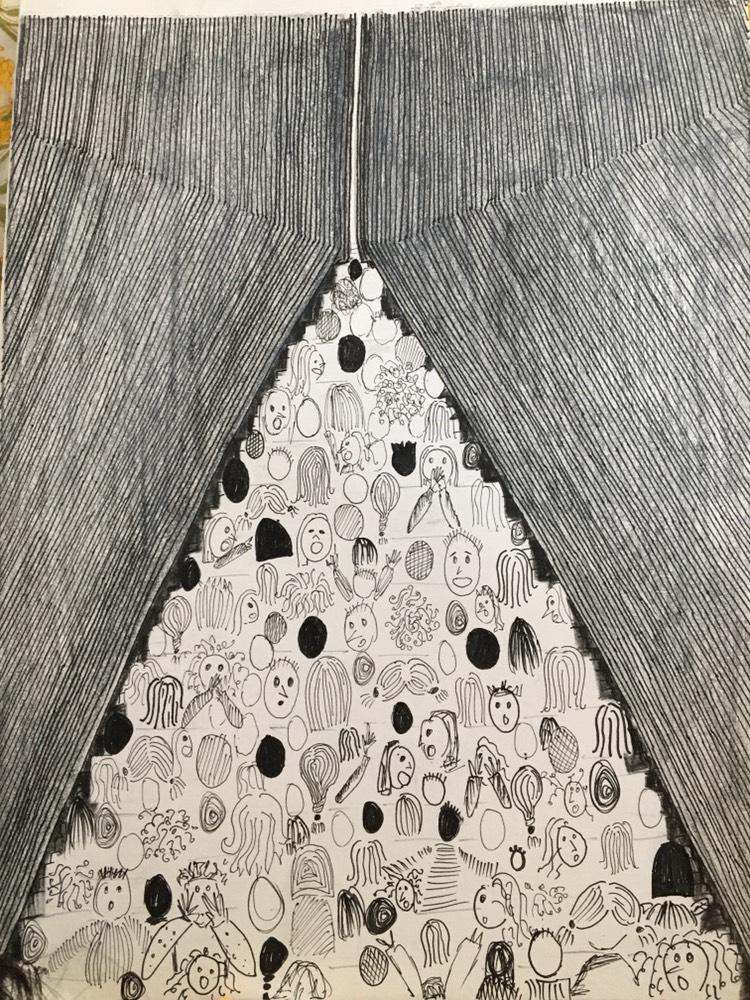
I have never been a fan of crowded places and my trip to the Tirupati temple in Andhra Pradesh as a young girl is something that I don’t think I will ever forget. I was standing in a queue in a narrow passageway for six to eight hours with people much taller than me pushing me from all directions and I remember not being able to breathe or see clearly.
Memory Sketch from my trip to Tirupati
I had made this sketch,to the left, from memory as part of an assignment for the Space and Place course, to depict what I felt in that claustrophobic space. experienced there and not the visual alone. Apart from feeling like the walls were closing in as I was walking up the stairs, I remember feeling lightheaded and dizzy, my palms were sweaty and I felt weak. One of the biggest takeaways from that course for me was that spatial character is understood by our sensorial experiences in that space, combining all senses and activities.
For this week’s exercise, we looked at vessels. In the chapter on vessels in the book ‘Chambers of a Memory Palace’ by Charles Moore and Donlyn Lyndon, we understand that proportions and context in a room are meant to accommodate us and so, high rooms would ensure an adequate volume of air for its inhabitants. Additionally, the volume of a room must be great enough to afford appropriate freedom for the inhabitant. Keeping these in mind, I began working on my model that was going to a vessel with the feeling of claustrophobia playing into its form.
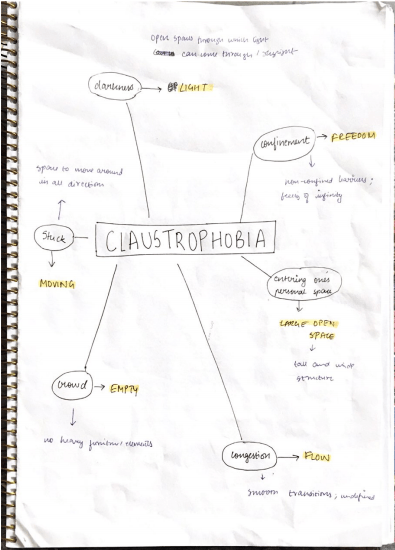
The first step was identifying the many elements associated with the feeling of claustrophobia, i.e darkness, confinement, congestion, crowd, feeling of being stuck, etc. Once I listed them out, I began reversing the elements and noting down its contrasting elements i.e, light for darkness, flow for congestion, moving for stuck, etc. This was aimed at understanding what the different elements would be if I were to incorporate them into creating a space that can be comfortably inhabited by someone with claustrophobia.
Mind map
Subsequently, I added certain characteristics of built spaces that I believe will allow us to achieve elements attached to it. For example, to achieve a ‘moving’ state within a built environment it must have space for someone to move in all directions and not feel restricted. This is a mind map of everything discussed above with the encircled text indicating the elements associated with claustrophobia, reversed elements in yellow highlight and blue text representing the characteristics of the space.
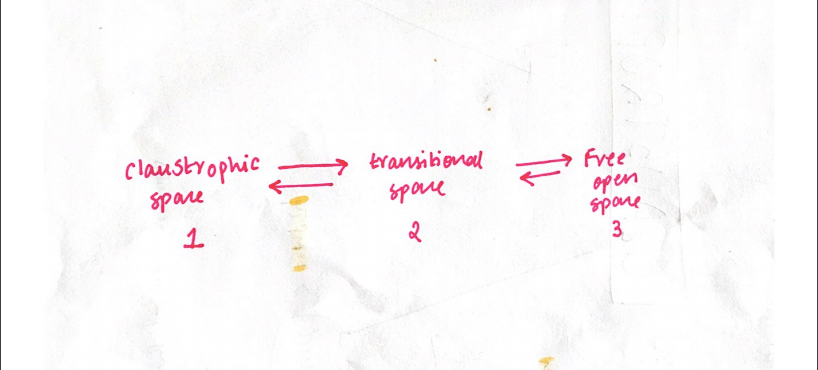
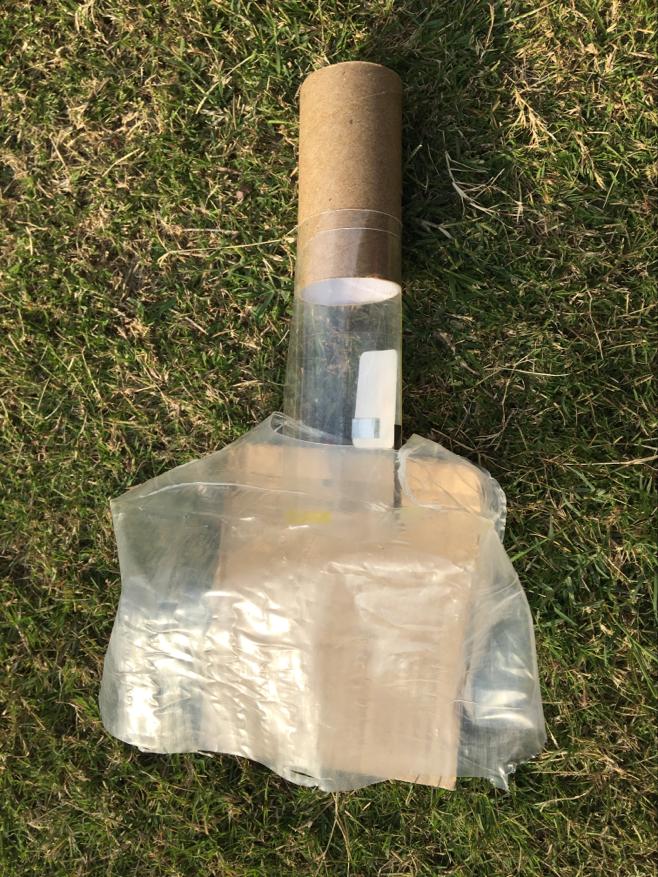
I decided to create a vessel that progresses from a claustrophobic space to an open one or vice versa, depending on how it is accessed. As explained below, the claustrophobic space or space 1 opens into an intermediate transition space 2 and finally into a free open space 3. This process can however, be reversed if a person enters the vessel from space 3 and moves towards 1.
Basic structure for model planning
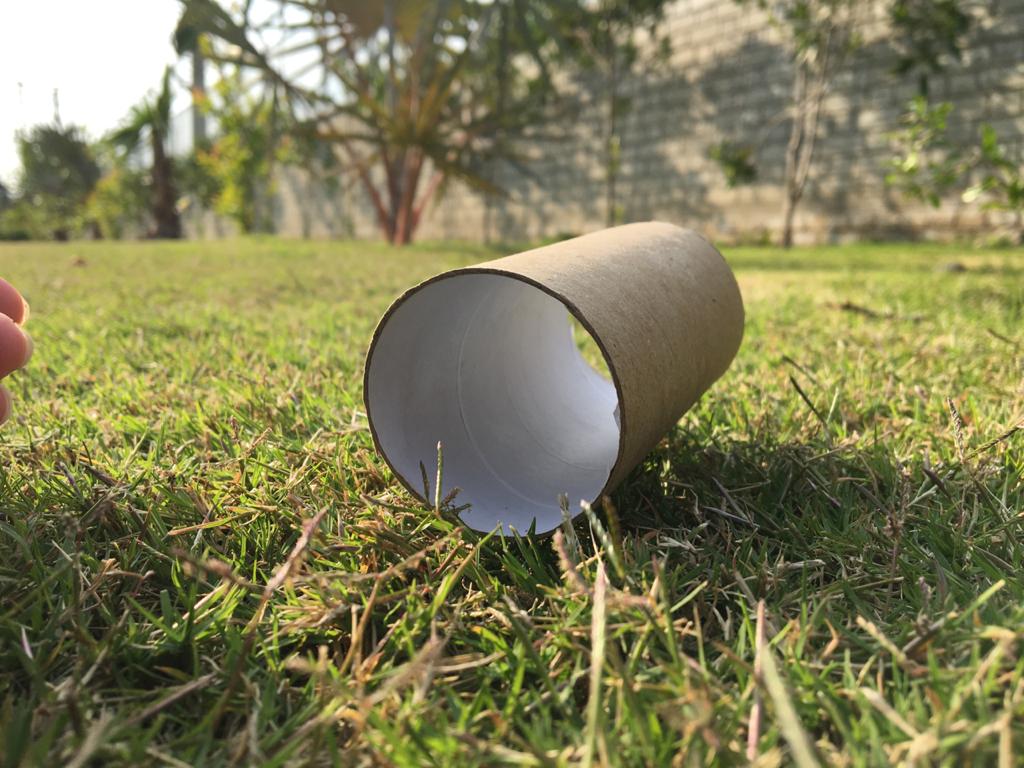
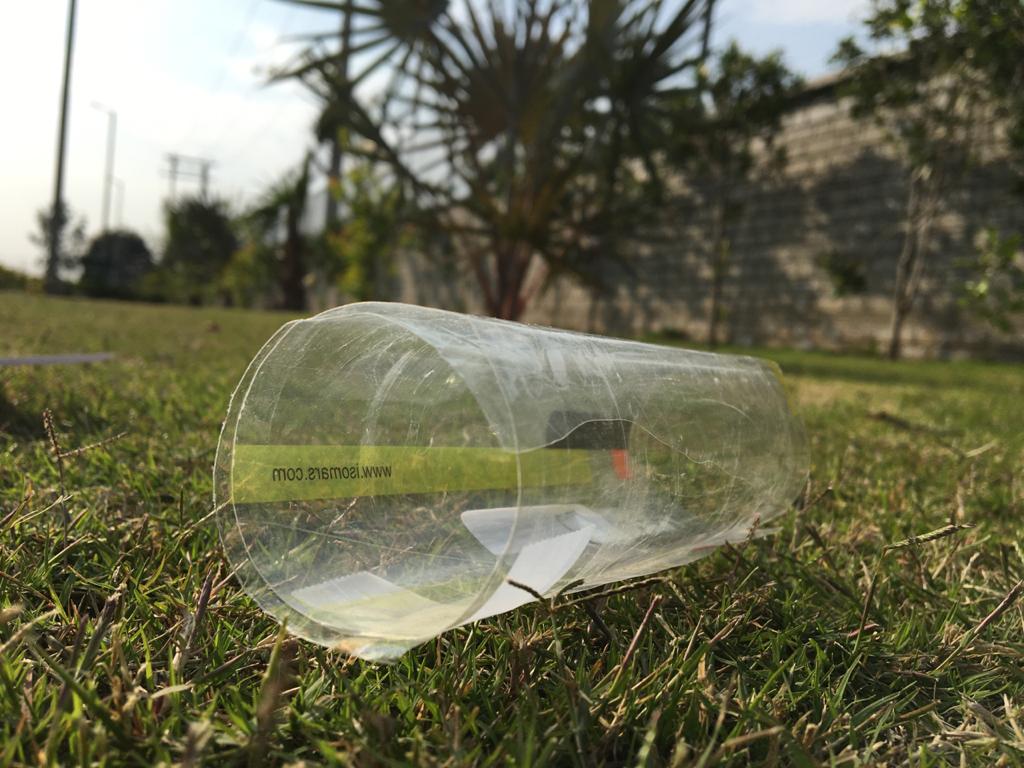
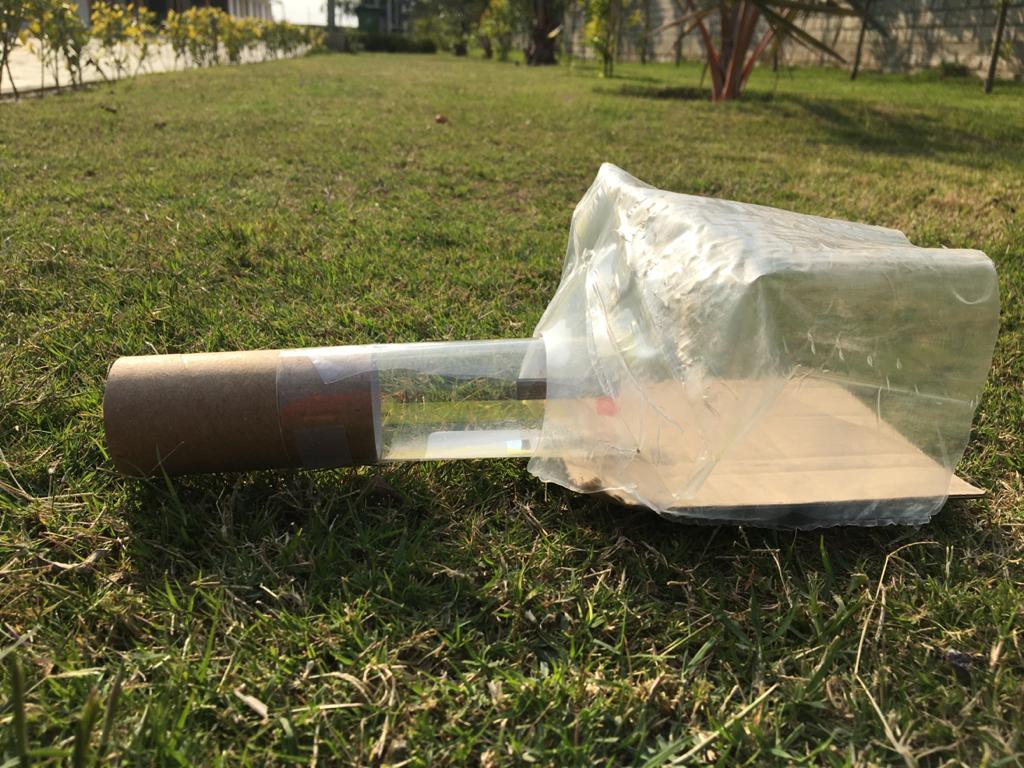
Space 1 will consist of a dark and narrow space that I created using a cardboard tube. This gives us a narrow, dark and tunnel-like space evoking a sense of claustrophobia.
Space 1
Space 2
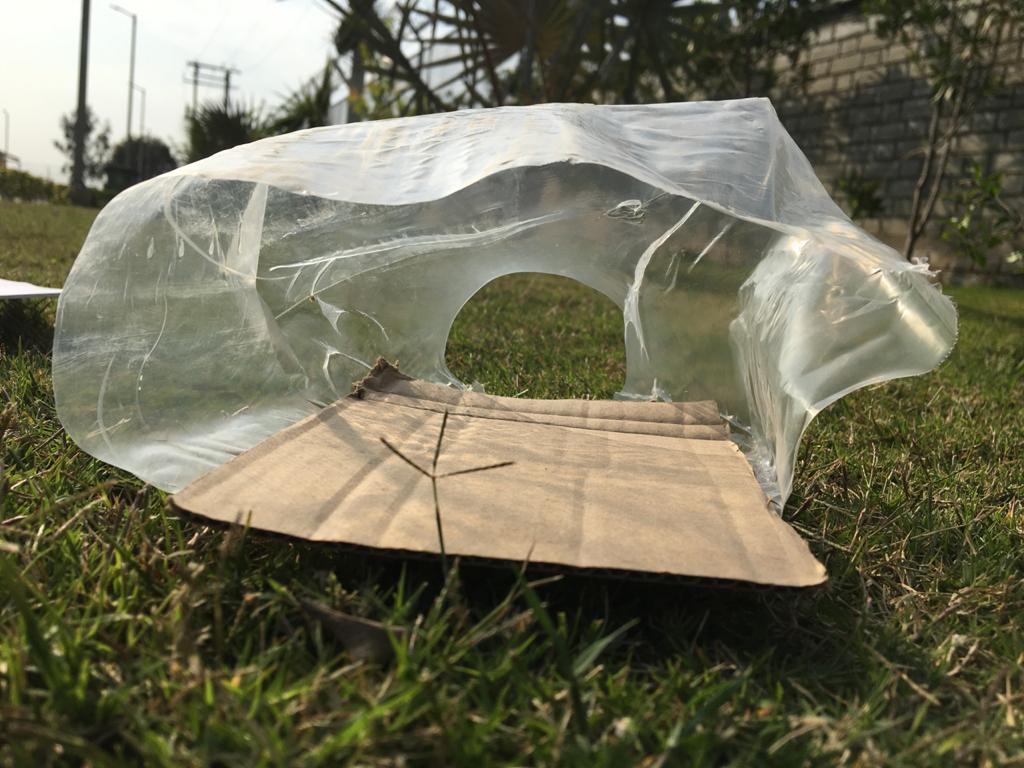
This opens into a similar tunnel-like space except it is transparent and allows sunlight to come in. Although the person can’t escape or leave the tunnel in that space, visually, they can explore what’s outside from all directions. This connects us to a previous blog entry about portals, where we discussed portals for the body and portals for the eyes. This second space is meant to act as a portal for the eyes.
Elevation
Plan view
Space 3
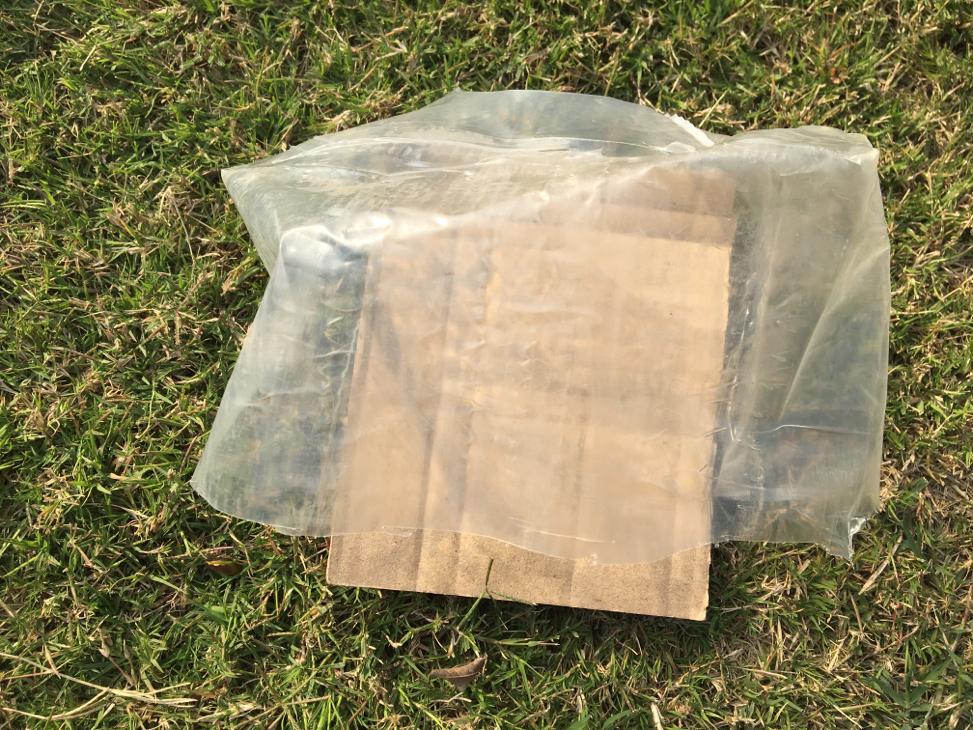
The third space acts as a portal for the body and is meant to evoke a sense of freedom and allow a person to escape. The ceiling is much higher to avoid interfering with one’s personal space, there is a feeling on emptiness and flow as well as ample sunlight.
Plan View
Elevation
Final model of Vessel
The experience of a person walking through this vessel will depend on which side they choose to access it from but the idea of the creation of such a vessel is to have a more dynamic understanding of the space with different degrees of claustrophobia rather than a singular meaning attached to it as I did with the temple at Tirupati.
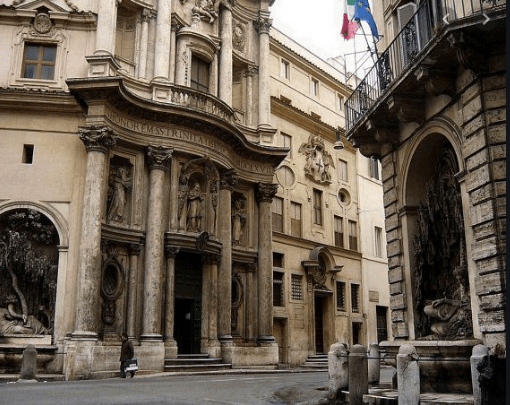
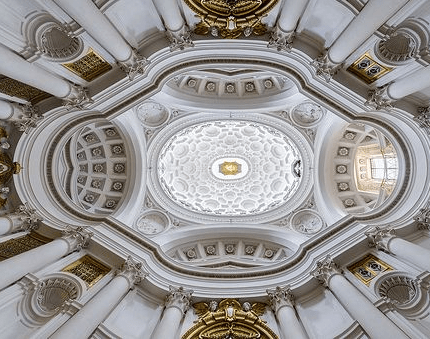
When I hear the word “wall” I immediately think of a flat rectangular surface flanked in between two similarly shaped and perpendicularly placed walls. Something that fascinated me from this week’s lecture was the walls of the Borromini in Rome. These walls are not only theatrical and sculptural but also flexible and dynamic. They beautifully transition from the skin of the building to a space that belongs to both the building and the street. The folds and curves help in creating a multi-layered system that creates unique choices and experiences for the user.
Borromini, Rome, Italy
membrane from last week’s portal exercise.
As I had mentioned in my previous blog, my understanding of these elements are quite limited, explaining my choice of using a rectangular piece of cardboard as a membrane in the previous exercise. While creating my model this week, keeping in mind the mistakes from last week, my process was slightly different.
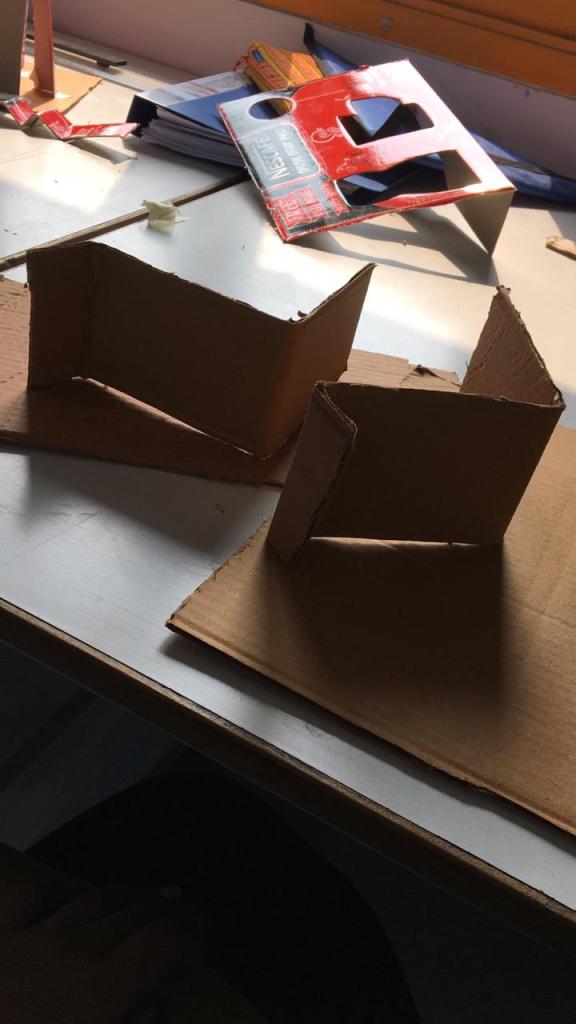
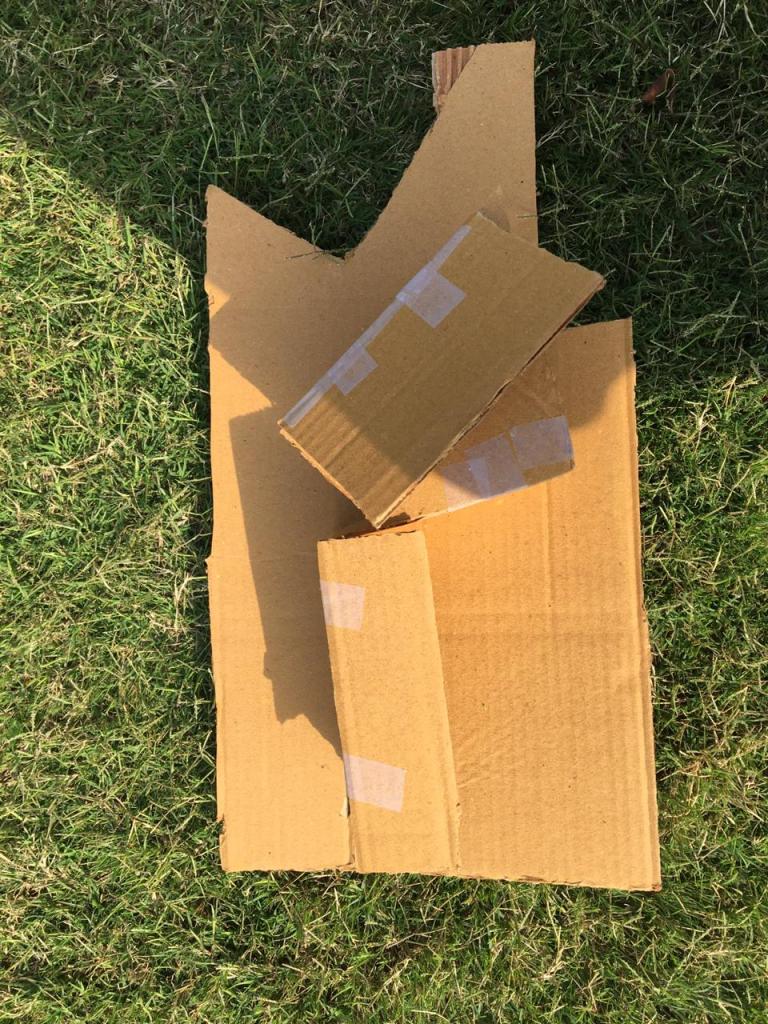
first model, to be viewed in plan
I started with two rectangular pieces of cardboard, one that would act as a base and the second which would be manipulated to create a membrane. I played around with these pieces to understand where I could make folds and bend the material comfortably. Incorporating my emotion of claustrophobia into the current model, I created two folds on one of the pieces of roughly 1:4 proportions. The two folds were meant to create pockets of space that were narrowing in, evoking a sense of claustrophobia. This first model was to be viewed in plan and the folds were made inside and out, creating interior and exterior spaces based on how they were viewed.
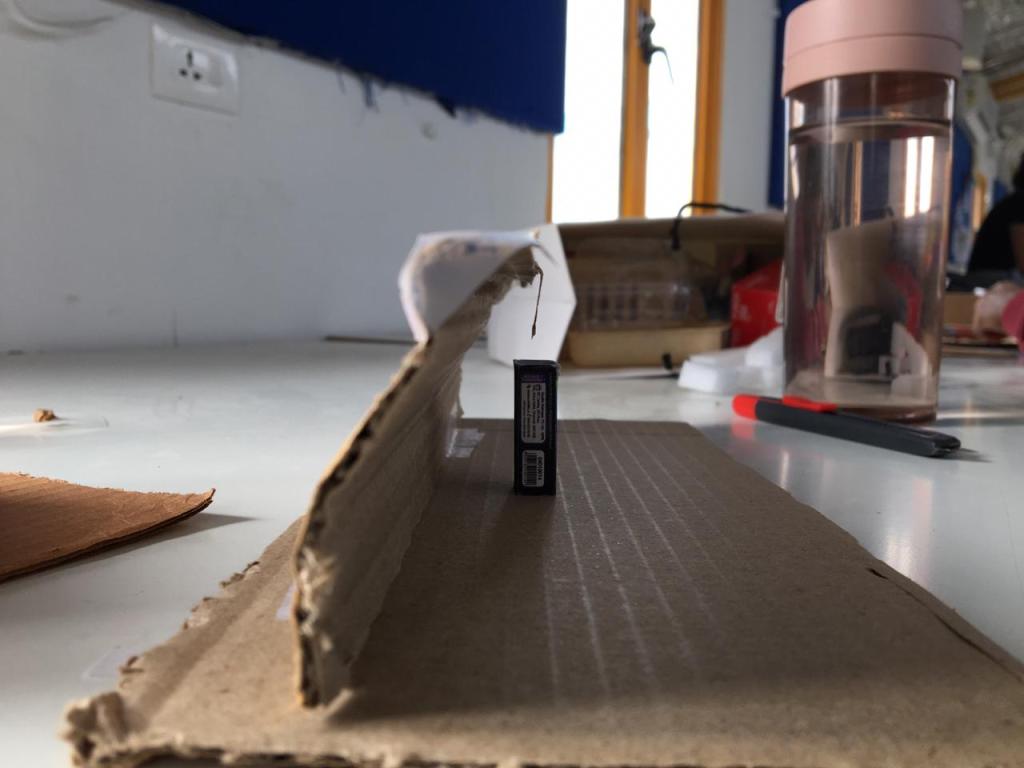
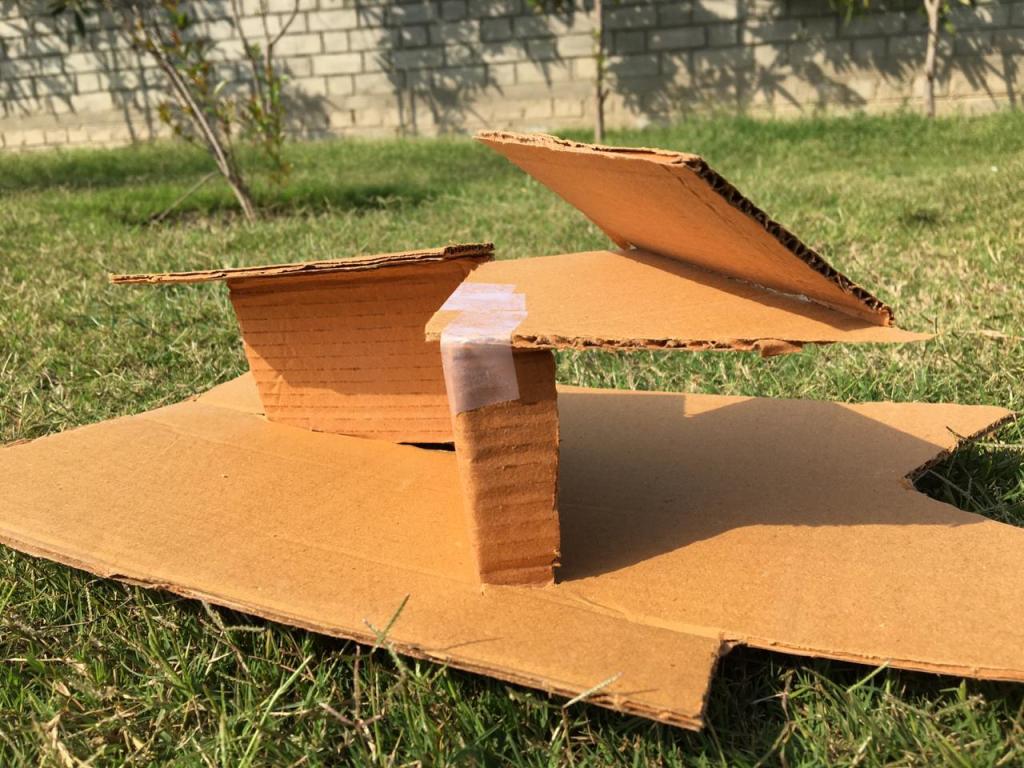
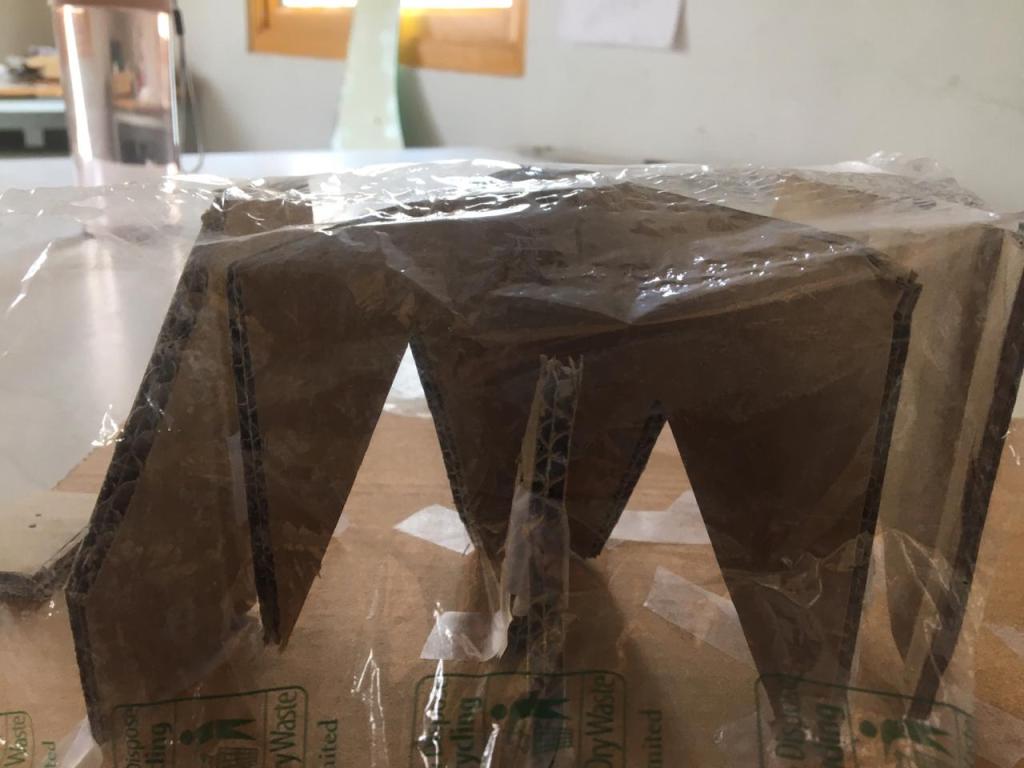
The second model was to be viewed in section, this meant that the folds made, and therefore, layers created must add an element of vertical dimension to the wall, making it thicker and easily manipulative. Initially, I had bent the cardboard in such a way that it created a curved wall.
Although this allowed me to create a flexible wall, it didn’t align with the emotion I had chosen. I needed to create more narrow spaces for my mini-me to experience a sense of claustrophobia. Instead, I decided to create two similar folds as I did in the first model, except I made these folds vertically instead of horizontally.
second model, to be viewed in section
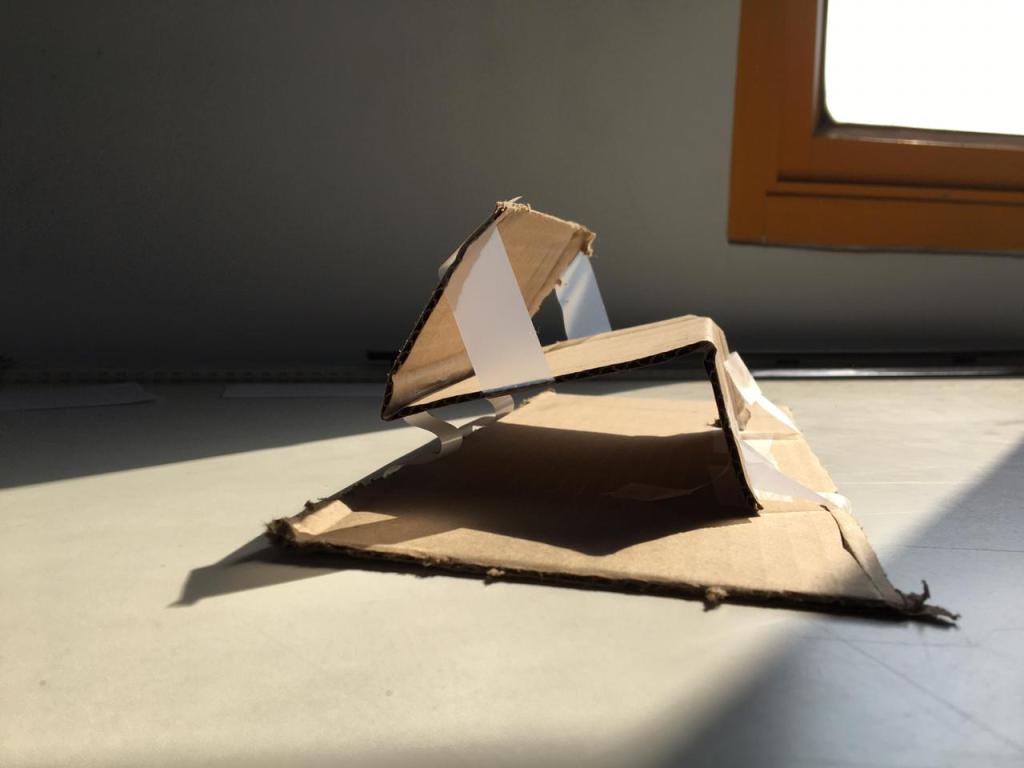
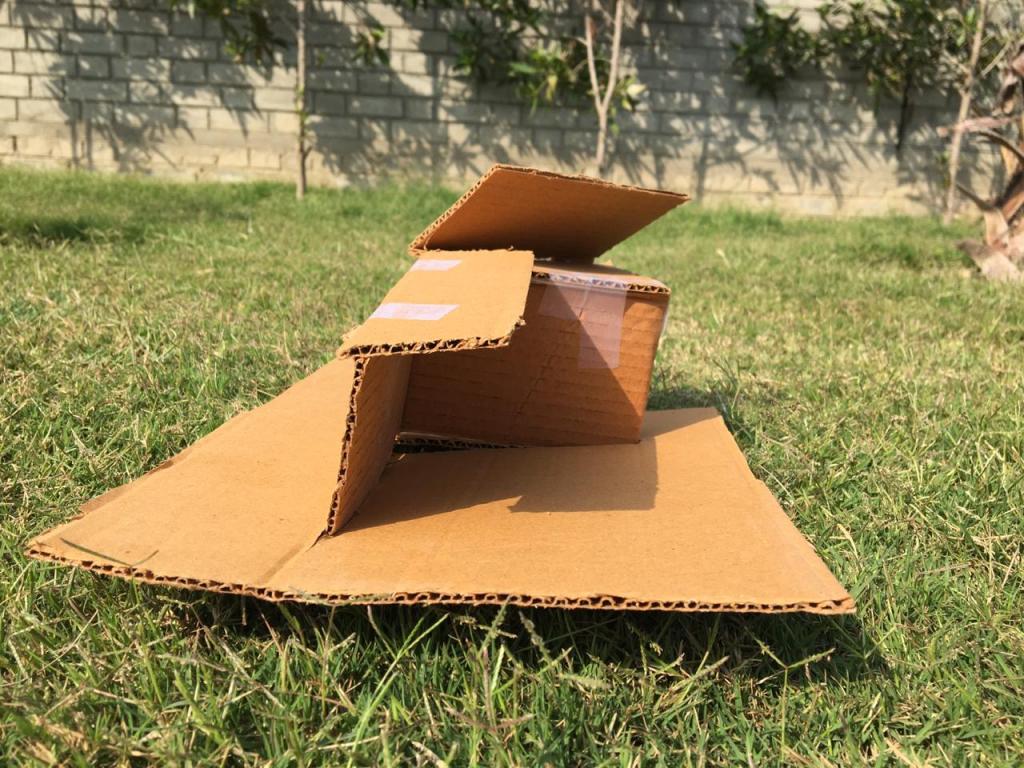
The third model I made would have to incorporate both of these models to create one flexible membrane. I didn’t necessarily replicate either of them but tried to include elements of both to heighten the sensorial experience of claustrophobia once would experience if they were to use this space.
Third model incorporating elements from the first two
Unlike the previous weeks, while making this week’s model, I didn’t have an initial idea of it before I started working on it. I didn’t impose an idea onto the material, instead, I allowed the material to guide me through what my model was going to look like. The method of creating two initial models and then incorporating them into a third one was challenging and exciting. By doing this I realised that I had so many choices and places to make decisions rather than when I had to replicate an idea that I had in my head. I feel that we are largely conditioned to believe that good work comes from “creativity” or “originality” when this is not the case. By removing our biases from our work, we can find so many opportunities that would have otherwise gone unnoticed
“If openings are the eyes of the building, portal is the mouth, the aperture most able to tell us about what is beyond.”
Charles W Moore, Chambers of a Memory Palace
Simply put, a portal is an opening that bids welcome and cultivates experiences of what lies beyond. It allows one to imagine life outside from within it, edit the unwanted parts and emphasise the parts that need to be seen. A portal or opening translates a tight membrane into a flexible system. To better understand this concept we made models of portals using scrap materials that we found lying around. After gathering the material, we were given sheets of cardboard to use as the base for our models. The task was to create two portals, one that we could move through or enter, and the other we could see or access but only through our eyes. I immediately understood them as windows and doors, the former being the portal for the eyes and the latter, for the whole body.
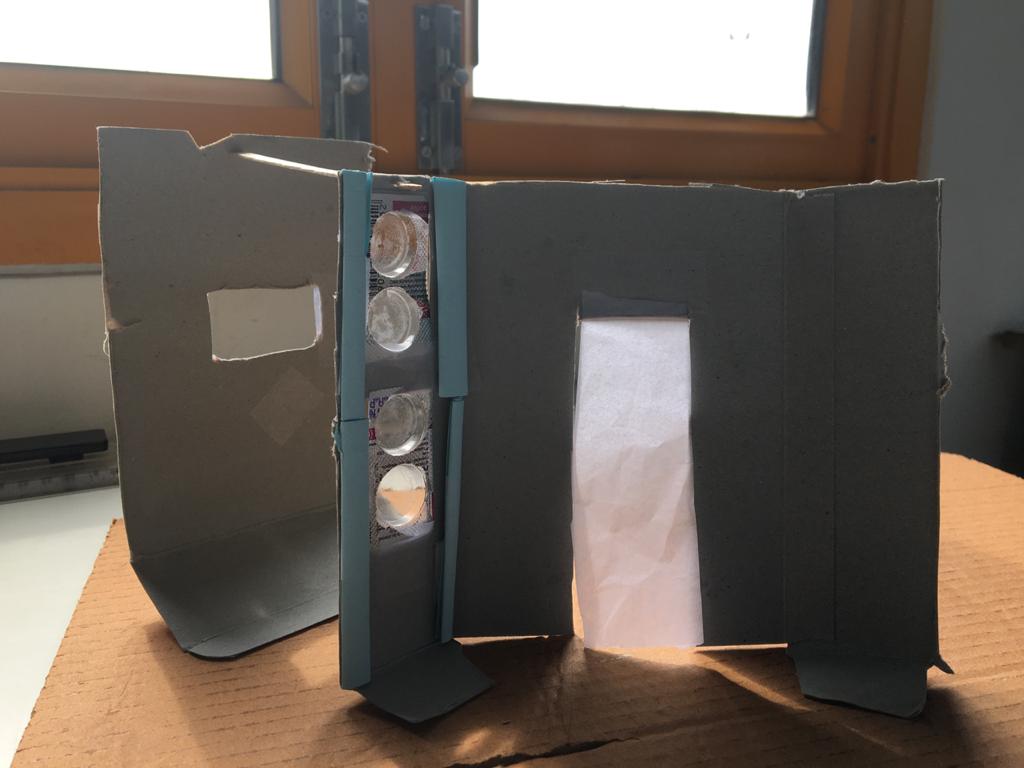
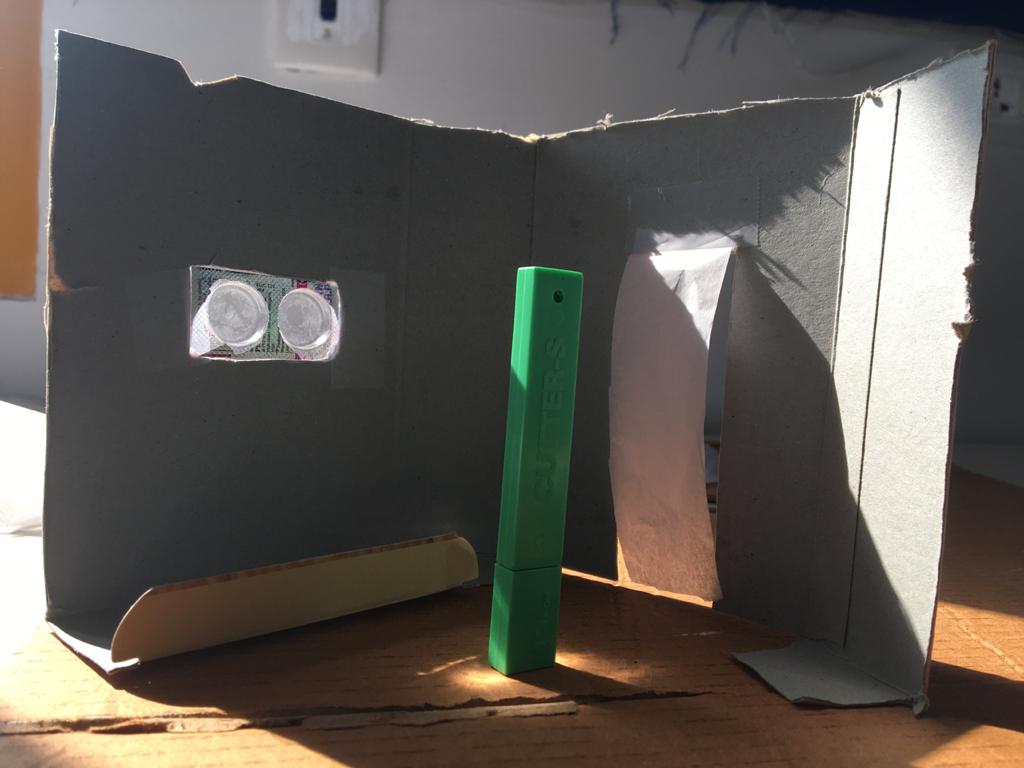
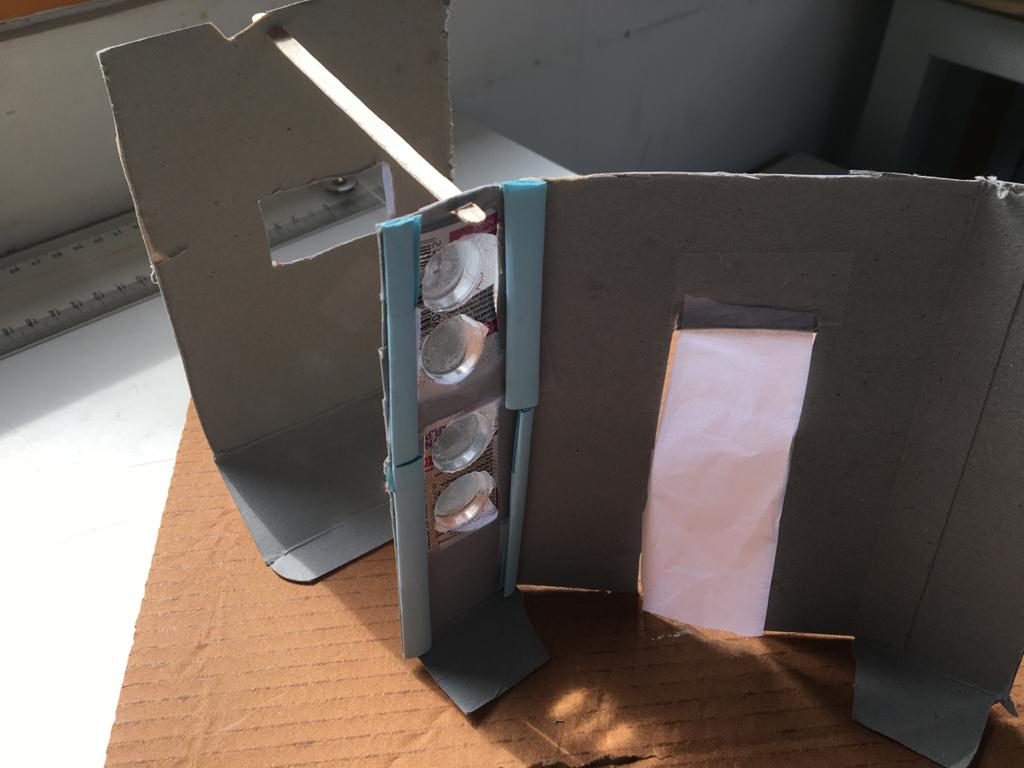
To go about the making, we were instructed to select an object that we could use as a human scale reference or a ‘mini-me’. Essentially, whatever we make should be able to use by our mini-me. I chose a pencil lead refill container as mine. To create the portal, I cut up an empty sweets box made of cardboard and decided to use it as my membrane, i.e the rigid part of the structure. Since the box had folds in it, I decided to use it as adjacent walls and used the pre-existent flaps to attach it to the base. I created my first portal by simply cutting out a rectangle from one of the surfaces. This was supposed to be the portal that my mini-me could move through. Because I had initially limited my understanding of openings on walls to doors and windows, I added a curtain I cut from tracing sheets. Next, using empty tablet packages I decided to create my second portal. I roughly estimated where my mini me’s eyes would be and placed this portal on the membrane accordingly. I created two spaces, one where the mini-me is standing and the second, on the other side of the membrane
First iteration of my portal model The green box is my scale reference or mini-me.
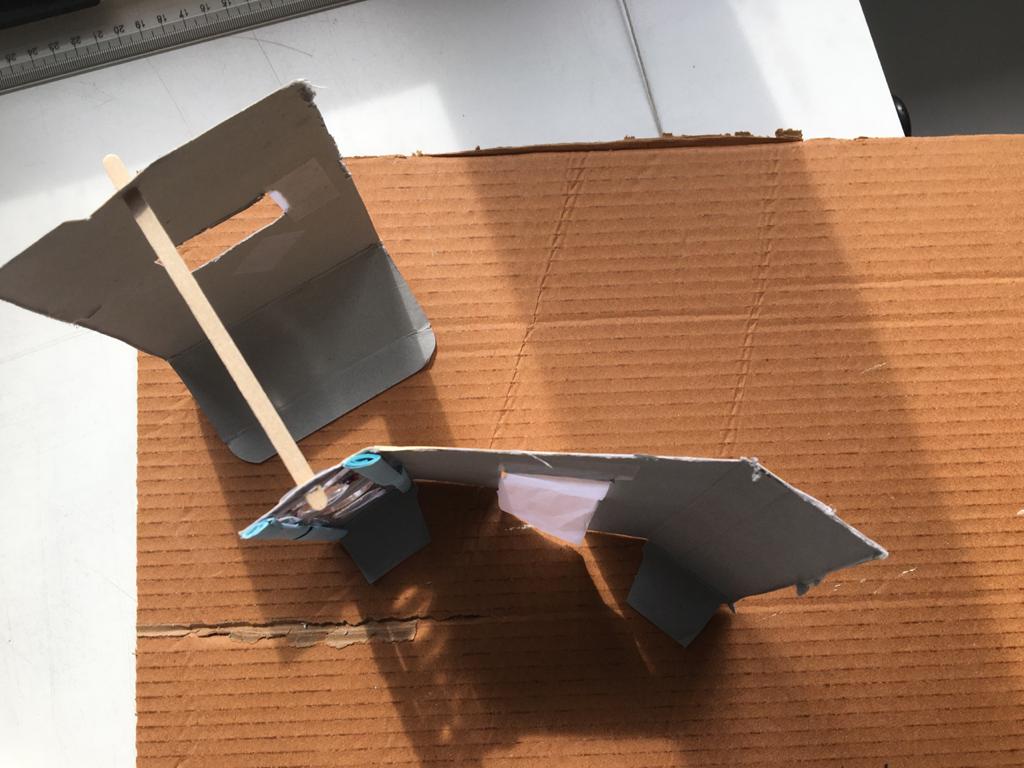
I had now created, an incredibly generic house setting with a door and window. Upon consultation with a faculty member, I was advised to create three spaces. Each of the portals opening into different spaces, unlike what I had previously done. To create this new space, I decided on a semi-interior space, almost resembling a porch. This porch was meant to create a partially enclosed private space, within the public realm. Additionally, I relocated the windows to create a vertical element as shown.
Final model (portal for the eye opens out to a semi-private space and portal for the body leads to the open)
Reflecting on this exercise, I realised that I wasn’t satisfied with how my model turned out. Although I managed to create two portals on a membrane, I had used concepts of openings and portals in quite a conventional way and tried to play it safe. This doesn’t mean, however, that I didn’t learn from this exercise. Looking at and engaging with my friends models I was able to pick up a lot that I intend to incorporate into my following models.
Some of them stepped outside of the idea that portals for the eye have to be smaller than the ones you can walk through, which is a misconception I had constructed in my head. They played around with the shapes and proportions of it to create different kinds of portals, not restricted to doors and windows.
model by Dhruvi Singh
model by Udhi Malhotra
Another interesting element some of them brought in was switching membranes from surfaces to spaces. They created portals through spaces rather than walls or flat surfaces, bringing in a three-dimensional aspect to it.
These interesting models made by my friends helped me widen my understanding of portals, from windows and doors to something interactive and dynamic. By strategically placing flexible openings on different kinds of membranes, we can create multiple sensorial experiences. In the upcoming models, I hope to start thinking of some of these elements in ways outside of what I imagine them to be.
An integral component of any form of design is legibility. Legibility, simply put, can be understood as the organisation of matter coherently. By accessing a legible space, one must be able to analyse their environment and construct a clear mental image. This legibility can be of varying degree and although it is impossible to quantify it, there are several tools architects and designers use to organise information in a way that it is legible to readers. One such tool is the axis.
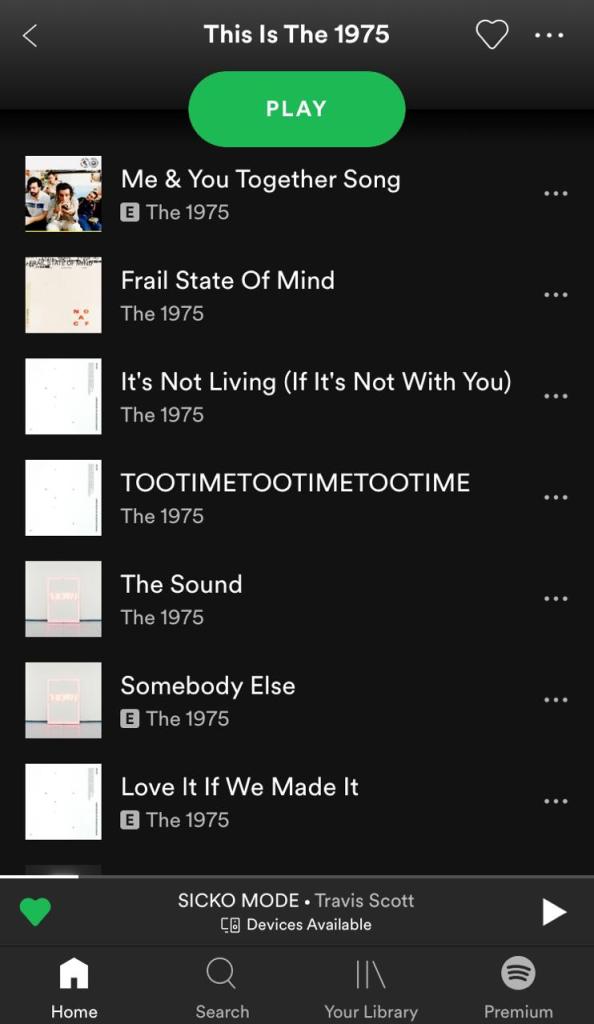
Spotify playlist; vertical axis(imaginary) separating album cover and song information
The axis is a design principle where all elements are organised in a line, imaginary or otherwise. It is used to align elements, reinforce the division of space, create continuity, structure symmetry and maintain a certain order. It has qualities of length and direction and induces movement along with it. An example of this would be the album list on iTunes or Spotify where songs are arranged one below the other, album covers on the left and the name of the song and artist to the right with a vertical axis separating them.
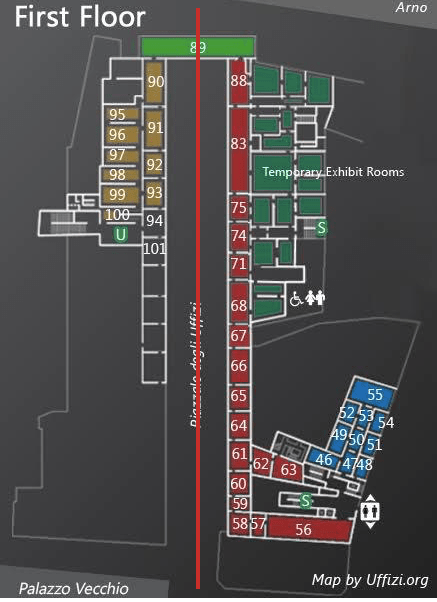
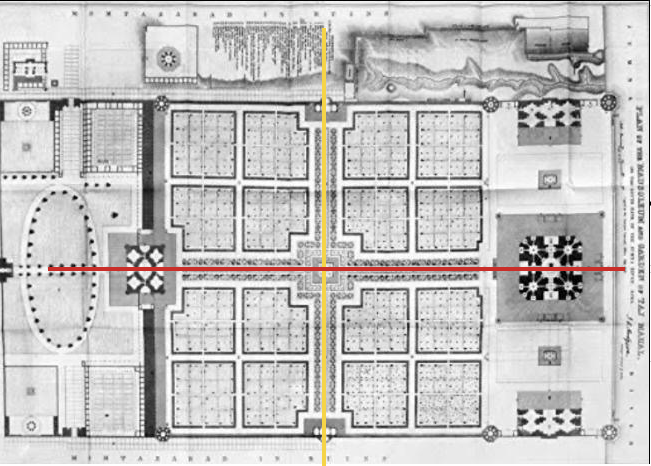
Axes have been used widely in architecture, some examples being Uffizi gallery in Florence, Italy and Taj Mahal in Agra, India. Axes usually have an anchor point and in most cases, there exists minor axes or cross axes that run perpendicular to the major axis. These cross axes create more choices and opportunities for the person to choose from.
Shown below, are the architectural plans of the Uffizi Gallery in Florence, Italy and The Taj Mahal in Agra, India. The Red line represents the major axis and the yellow represents the minor axis. The presence of the minor axis allows people to choose which path they want to follow.
Left- Plan of Uffizi Gallery, Florence ; Right – Plan of Taj Mahal, India
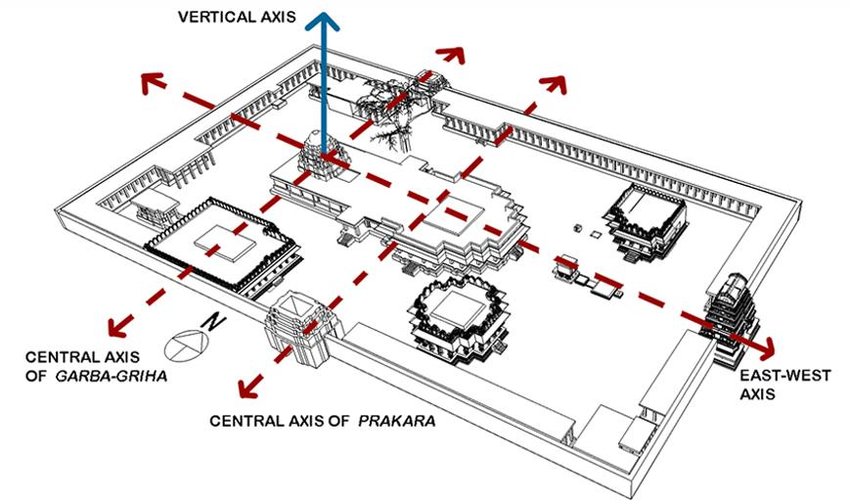
It is important to note, however, that the architect or designer doesn’t use axes arbitrarily in design. It can hold several meanings when used in different ways. Architecture has always been an effective way to exhibit power or authority and axiality is one of the simplest forms of exercising this power. In many cases, it is used to create a sense of spatial hierarchy. This is commonly used in religious architecture, where the axis is used in a way that there is a progression from the least to most sacred space within a place of worship.
Plan of Vittala temple, Hampi, Karnataka. image source : research gate
To the right, is an axonometric of the Vithilla Temple in Hampi, India. Apart from the horizontal axis, there is also a vertical axis which moves upward from the shikhara. The point of intersection is where most of the religious practices are held and the idol is placed, as it is considered most sacred.
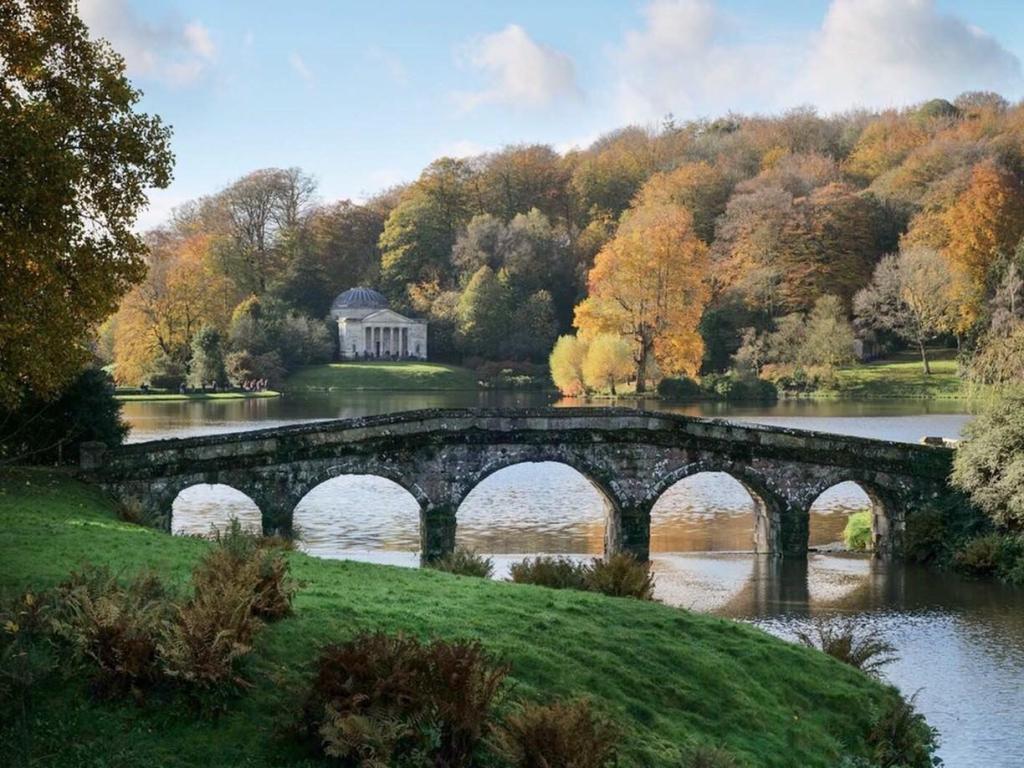
Stourhead, England image source: trover.com
While defining axes, it is important to discuss another movement system, the path. While the axis allows the mind to connect two points in a line, the path allows the mind to wander. A Path allows for more choice. This, however, doesn’t mean that it is always different from an axis. In some cases, two places are connected in a single line without any breaking of alignment or minor axis, in which cases the path taken is the same as the axis. In a situation where there are choices, the path is created by the person moving through it and it allows them to wander. In the case of Stourhead in England, there is no axis present and the person is forced to take the path created by the architect. Here, the person is meant to wander and make choices along the way.
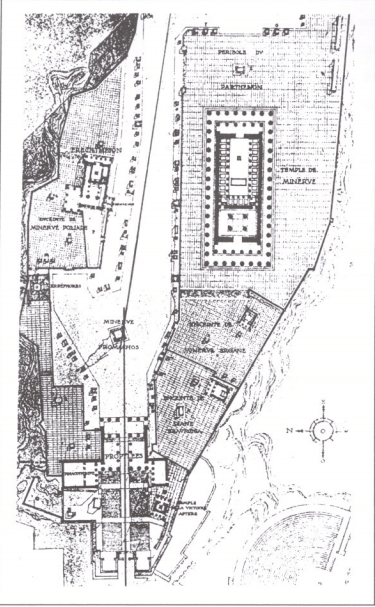
Broken axis of Acropolis, Athens Monumental Statue
Another commonly used device in architecture is the deliberate breaking of the alignment of the axis. This is done to create multiplicities and allow more choice. Breaking of the axis creates a sense of spatial diversity and emphasises the importance of endpoints. By delaying the perception of the endpoint, monumentality and divinity of the endpoint increases. This is seen in the axis of Metropolis in Athens.
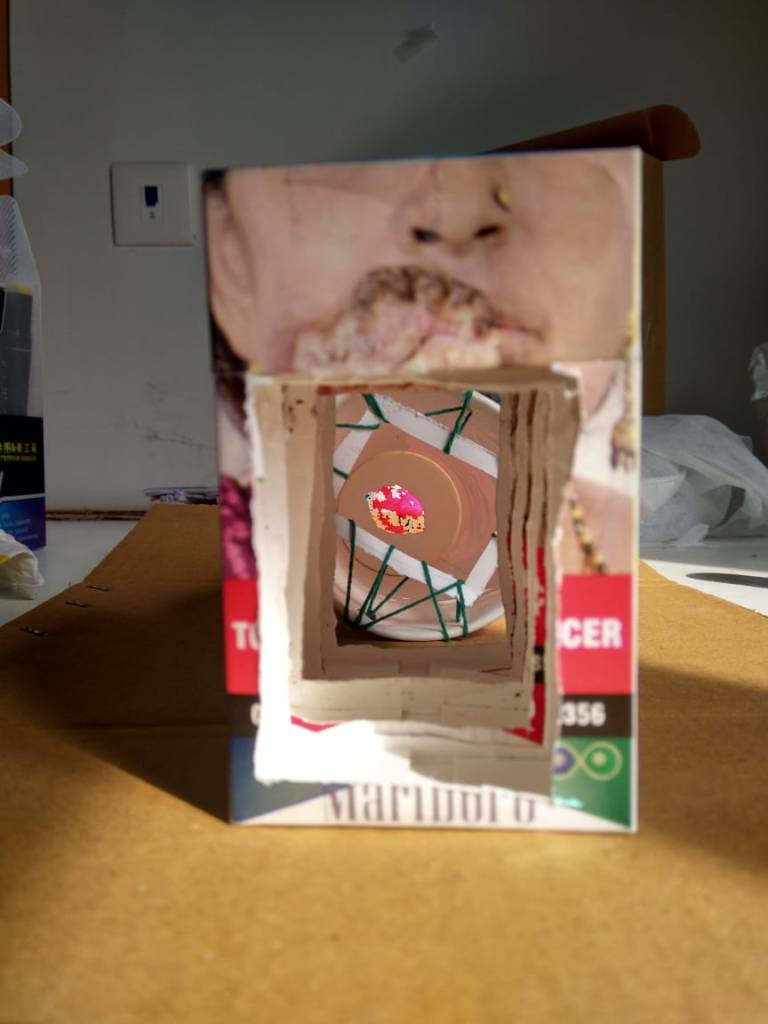
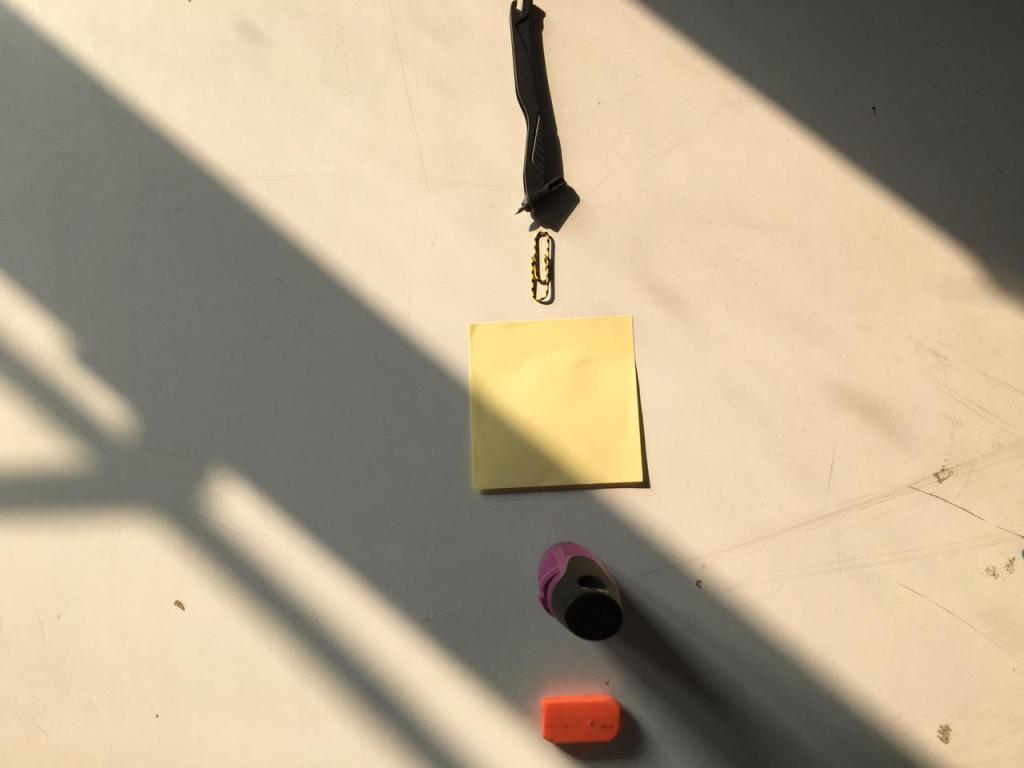
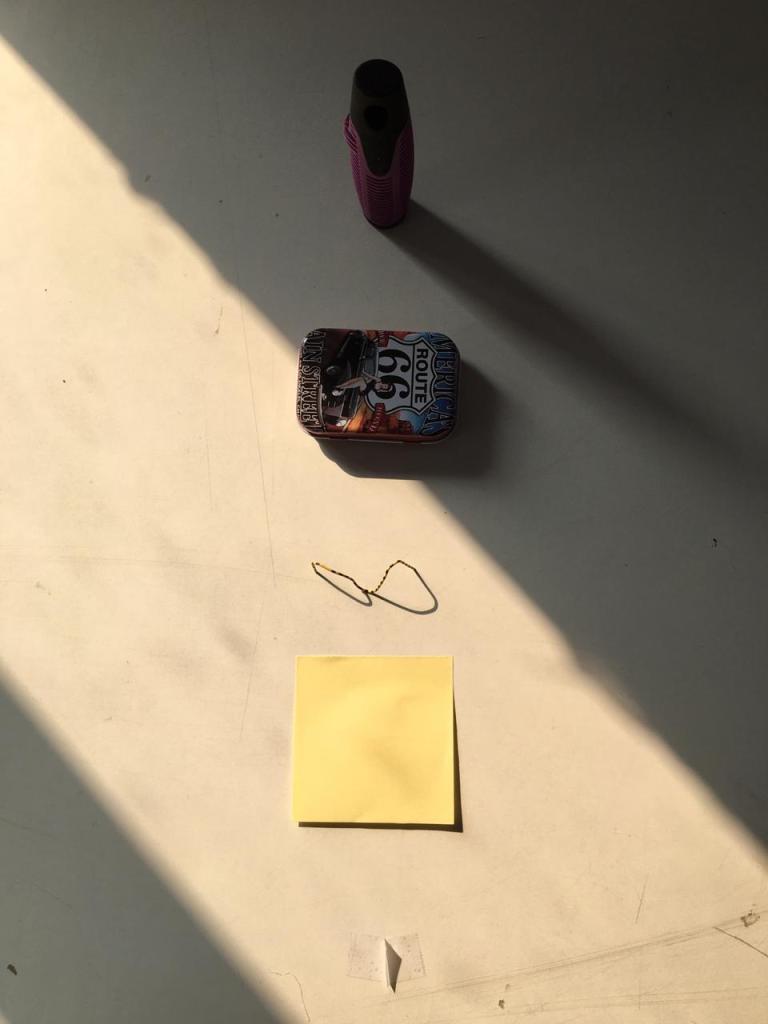
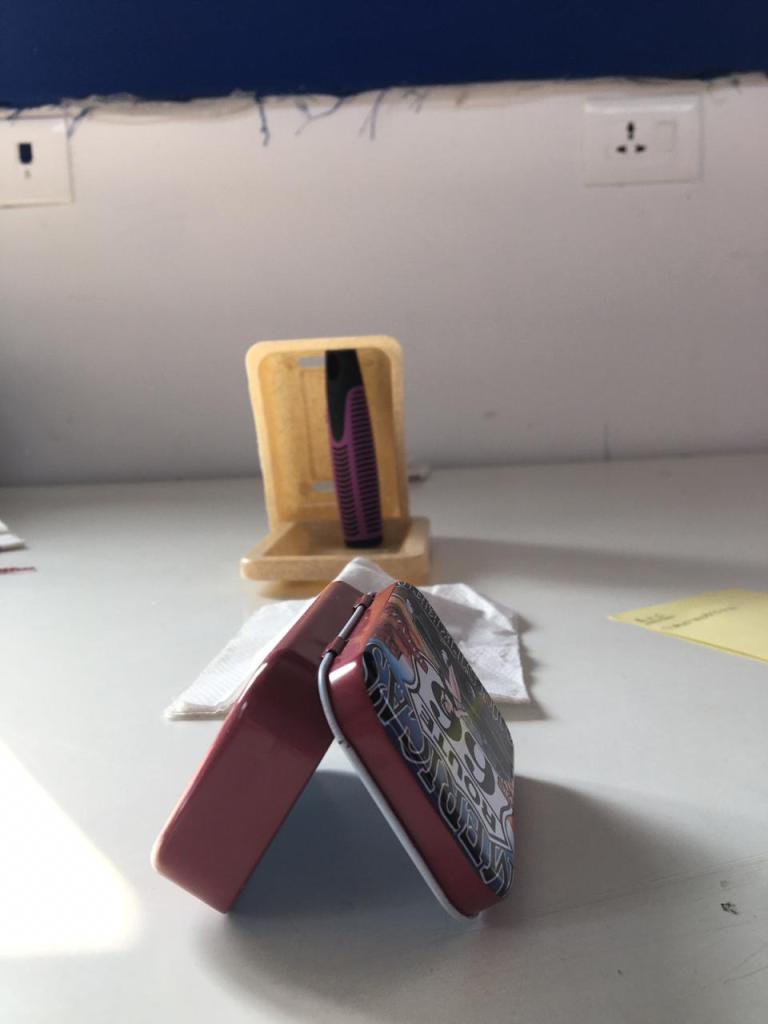
The picture to the extreme left below is an example of an axis made with five everyday objects. The image to its right shows a progressional axis in order of magnitude, i.e smallest to largest object or vice versa. This kind of axis is more deliberate than the first one. The third picture to the extreme right is an axis created to evoke an emotion of claustrophobia. Here, there is a narrow tunnel-like object that opens into a flap-like object which appears to be closing in.
(L-R): example of axis made with 5 everyday objects; progressional axis in order of increasing magnitude ; axis created to evoke a sense of claustrophobia
From this simple exercise, it is evident how the arrangement of objects in a particular way can evoke a certain emotion or create a sense of importance within itself. If we translate this to a larger scale, we can start to understand why this tool of axiality is so powerful and why designers and architects use it widely in all fields of design today.
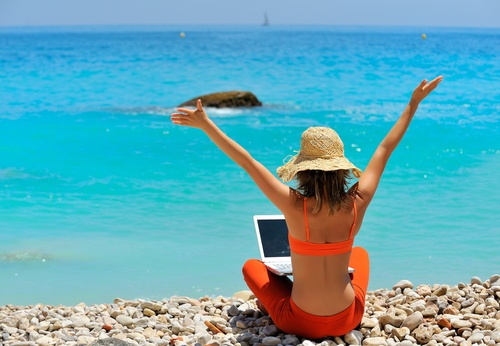
In my early teens, I began using social media and almost every teen blogger I followed on Tumblr, YouTube or Instagram was chasing after the wanderlust lifestyle. At age fourteen, I was intrigued by their ability to work in a space that wasn’t restricted to one geographical area. Fascinated by what I considered a glamorous way of life, I would hope that whatever profession I chose for myself in the future, would have the flexibility to travel around the world “freely”. Somehow over the years, this longing to roam freely and live an adventurous life persisted in popular media. Today, Instagram models, young entrepreneurs and other professionals travel the world carrying the title “digital nomad”, a term used widely and highly romanticized.
image source: under30 experiences
A digital nomad is someone who travels around the world and works out of their phone or laptop. Without the obligations of a 9-5 desk job, these new-age nomads can work from anywhere in the world, all they need is a good Wi-Fi connection. Although the concept of digital nomadism is fairly new, nomadism as a lifestyle has persisted far before Tumblr and Instagram, or even the internet, came into the picture. Since time immemorial, people have been moving periodically from place to place to raise their crops, find pasturage for their animals or trade goods. I have found myself guilty of throwing about the term nomad loosely and would like to discuss some of the misconceptions attached to this widely romanticized lifestyle of nomadism.
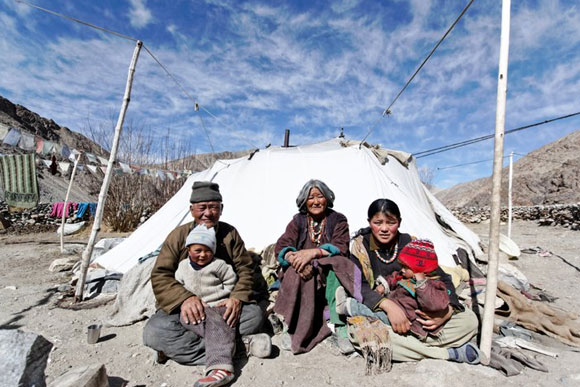
One of the biggest misconceptions regarding this lifestyle is the idea of unrestricted or undirected wandering. Nomads aren’t travellers who roam around aimlessly they follow a fixed periodic or cyclic movement. In the case of Changpas of Ladakh, they travel for the sake of finding pasture and water for their cattle. Their lives revolve around their animals and they move to suit the grazing times of their cattle throughout the year. Therefore, their lifestyle isn’t as flexible as it seems. Because they are dependent on these cattle for their livelihood, they should always be ready to pack and leave if the conditions call for it. As a Digital Nomad, one is free to move to the country of their choice and travel at any time of the year, they aren’t quite dependant on anyone else. Ironically, many of these digital nomads or travellers are on a quest to “find themselves” or their “purpose” and they hope that these travel experiences will guide them towards that. On the other hand, the situation is almost reversed in case of traditional nomads where there is an underlying purpose facilitating their movement.
image source: Conde Nast traveller
Additionally, nomadism is primarily based on community mobility and involves more people than just oneself. Nomads don’t move from place to place to find the world for themselves, they take their world with them and although nomads travel the world, each step is local and of low impact to the environment. One unique quality of nomads is their innate ability to create comfort for themselves regardless of where they are. One can argue that this is a quality most human beings possess but the matter of fact is that they are required to do it more regularly than others and their livelihood depends on it.
Even though a nomad’s living conditions are transient, they are very calculative in their movements and plan ahead of time. The changpas make cheese and butter to use for the winters and women spend a large amount of time during the day, weaving textiles, rugs and other items of rough use while living in their temporary homes. Men too weave saddlebags, tents and blankets for future use. Although they must be ready to pack and move at any point in time, it doesn’t mean that they do not plan for what comes ahead to the best of their ability. In the eyes of a digital nomad, this fluctuating and unpredictable lifestyle is seen as spontaneous and exciting while for a traditional nomad who is trying to sustain themselves, this uncertainty can be quite challenging since their finances are at stake here. This isn’t to say that the lives of a digital nomad are challenge-free, they face a lot of struggles too. The discourse is in context to the usage of the term nomad that over time, has almost erased the narrative of traditional nomads.
It would, therefore, be interesting to note why the term is accommodative of these different meanings and what does it then, mean to be a nomad, digital or otherwise and what ties them to this lifestyle?


 the girl in the beanie