
“If openings are the eyes of the building, portal is the mouth, the aperture most able to tell us about what is beyond.”
Charles W Moore, Chambers of a Memory Palace
Simply put, a portal is an opening that bids welcome and cultivates experiences of what lies beyond. It allows one to imagine life outside from within it, edit the unwanted parts and emphasise the parts that need to be seen. A portal or opening translates a tight membrane into a flexible system.
To better understand this concept we made models of portals using scrap materials that we found lying around. After gathering the material, we were given sheets of cardboard to use as the base for our models.
The task was to create two portals, one that we could move through or enter, and the other we could see or access but only through our eyes. I immediately understood them as windows and doors, the former being the portal for the eyes and the latter, for the whole body.
To go about the making, we were instructed to select an object that we could use as a human scale reference or a ‘mini-me’. Essentially, whatever we make should be able to use by our mini-me. I chose a pencil lead refill container as mine.
To create the portal, I cut up an empty sweets box made of cardboard and decided to use it as my membrane, i.e the rigid part of the structure. Since the box had folds in it, I decided to use it as adjacent walls and used the pre-existent flaps to attach it to the base. I created my first portal by simply cutting out a rectangle from one of the surfaces. This was supposed to be the portal that my mini-me could move through. Because I had initially limited my understanding of openings on walls to doors and windows, I added a curtain I cut from tracing sheets.
Next, using empty tablet packages I decided to create my second portal. I roughly estimated where my mini me’s eyes would be and placed this portal on the membrane accordingly. I created two spaces, one where the mini-me is standing and the second, on the other side of the membrane
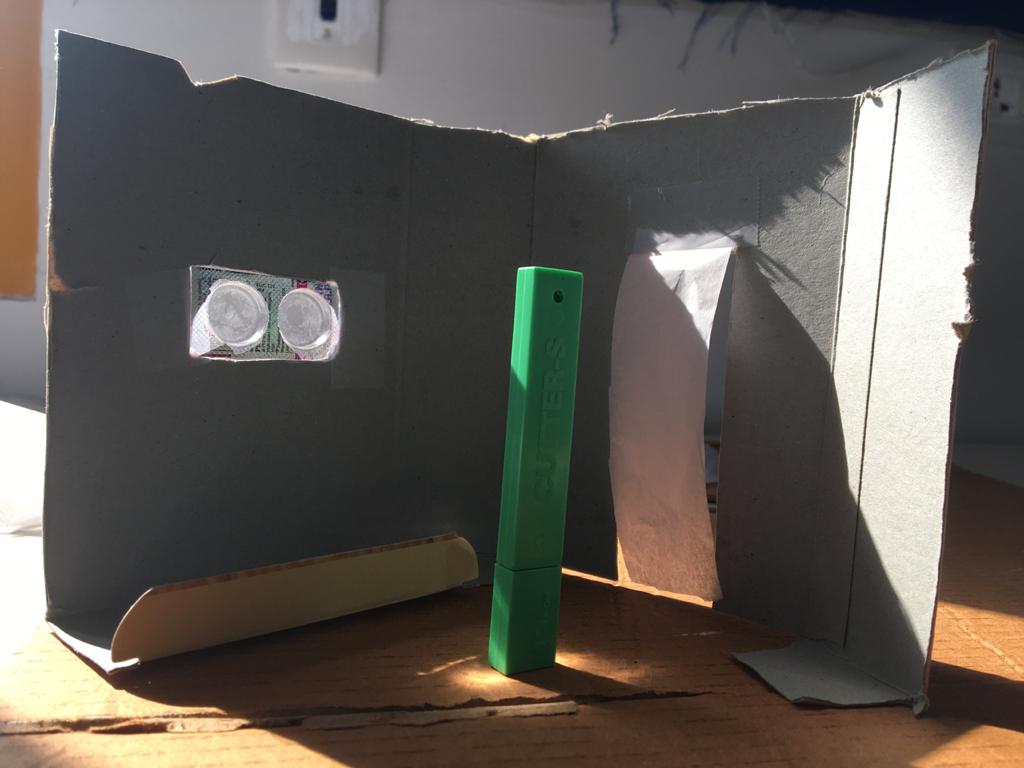
The green box is my scale reference or mini-me.
I had now created, an incredibly generic house setting with a door and window. Upon consultation with a faculty member, I was advised to create three spaces. Each of the portals opening into different spaces, unlike what I had previously done.
To create this new space, I decided on a semi-interior space, almost resembling a porch. This porch was meant to create a partially enclosed private space, within the public realm.
Additionally, I relocated the windows to create a vertical element as shown.
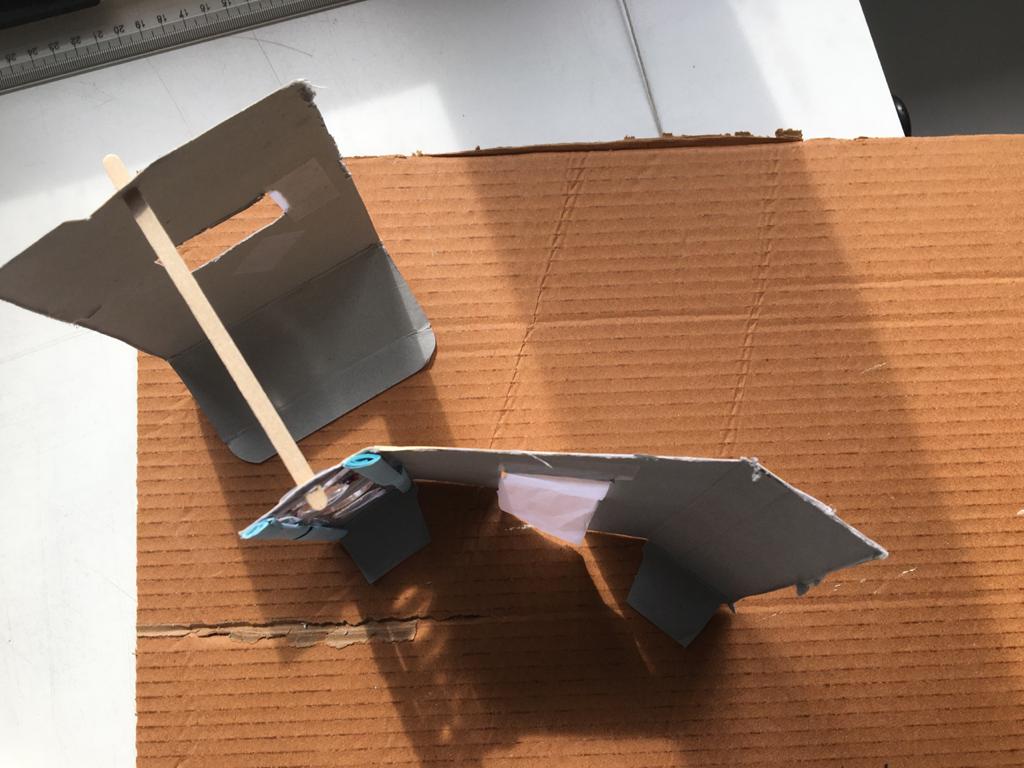
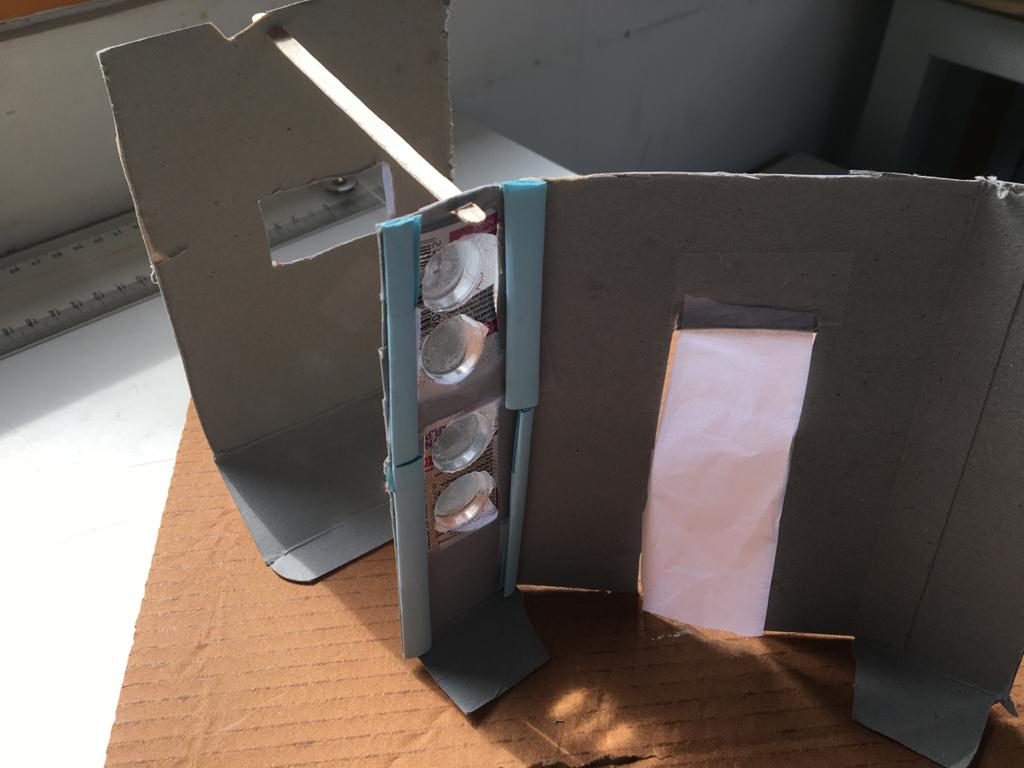
(portal for the eye opens out to a semi-private space and portal for the body leads to the open)
Reflecting on this exercise, I realised that I wasn’t satisfied with how my model turned out. Although I managed to create two portals on a membrane, I had used concepts of openings and portals in quite a conventional way and tried to play it safe. This doesn’t mean, however, that I didn’t learn from this exercise. Looking at and engaging with my friends models I was able to pick up a lot that I intend to incorporate into my following models.
Some of them stepped outside of the idea that portals for the eye have to be smaller than the ones you can walk through, which is a misconception I had constructed in my head. They played around with the shapes and proportions of it to create different kinds of portals, not restricted to doors and windows.
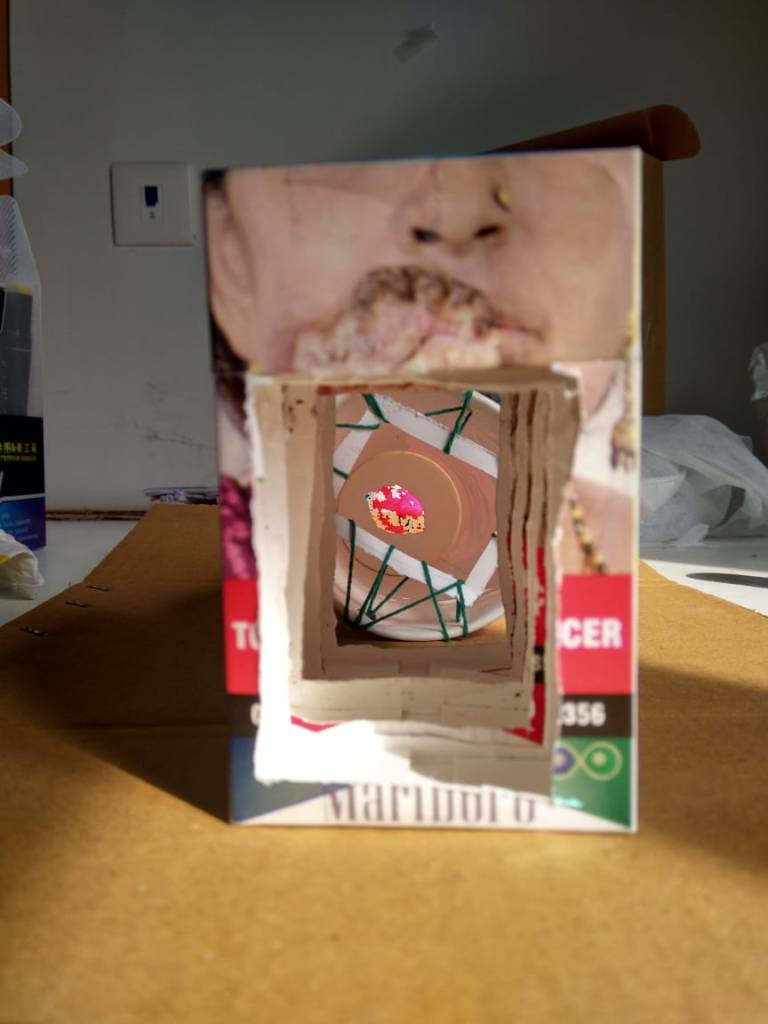
model by Dhruvi Singh 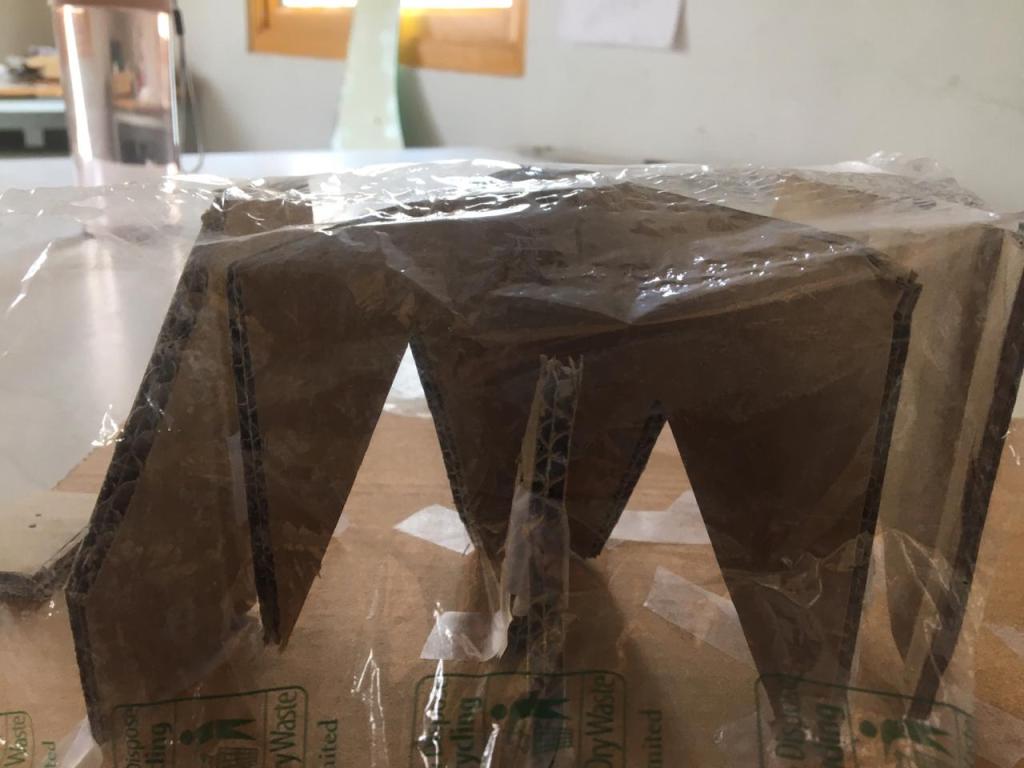
model by Udhi Malhotra
Another interesting element some of them brought in was switching membranes from surfaces to spaces. They created portals through spaces rather than walls or flat surfaces, bringing in a three-dimensional aspect to it.
These interesting models made by my friends helped me widen my understanding of portals, from windows and doors to something interactive and dynamic. By strategically placing flexible openings on different kinds of membranes, we can create multiple sensorial experiences. In the upcoming models, I hope to start thinking of some of these elements in ways outside of what I imagine them to be.
 the girl in the beanie