
In my early teens, I began using social media and almost every teen blogger I followed on Tumblr, YouTube or Instagram was chasing after the wanderlust lifestyle. At age fourteen, I was intrigued by their ability to work in a space that wasn’t restricted to one geographical area. Fascinated by what I considered a glamorous way of life, I would hope that whatever profession I chose for myself in the future, would have the flexibility to travel around the world “freely”. Somehow over the years, this longing to roam freely and live an adventurous life persisted in popular media. Today, Instagram models, young entrepreneurs and other professionals travel the world carrying the title “digital nomad”, a term used widely and highly romanticized.

A digital nomad is someone who travels around the world and works out of their phone or laptop. Without the obligations of a 9-5 desk job, these new-age nomads can work from anywhere in the world, all they need is a good Wi-Fi connection. Although the concept of digital nomadism is fairly new, nomadism as a lifestyle has persisted far before Tumblr and Instagram, or even the internet, came into the picture. Since time immemorial, people have been moving periodically from place to place to raise their crops, find pasturage for their animals or trade goods. I have found myself guilty of throwing about the term nomad loosely and would like to discuss some of the misconceptions attached to this widely romanticized lifestyle of nomadism.
One of the biggest misconceptions regarding this lifestyle is the idea of unrestricted or undirected wandering. Nomads aren’t travellers who roam around aimlessly they follow a fixed periodic or cyclic movement. In the case of Changpas of Ladakh, they travel for the sake of finding pasture and water for their cattle. Their lives revolve around their animals and they move to suit the grazing times of their cattle throughout the year. Therefore, their lifestyle isn’t as flexible as it seems. Because they are dependent on these cattle for their livelihood, they should always be ready to pack and leave if the conditions call for it. As a Digital Nomad, one is free to move to the country of their choice and travel at any time of the year, they aren’t quite dependant on anyone else. Ironically, many of these digital nomads or travellers are on a quest to “find themselves” or their “purpose” and they hope that these travel experiences will guide them towards that. On the other hand, the situation is almost reversed in case of traditional nomads where there is an underlying purpose facilitating their movement.
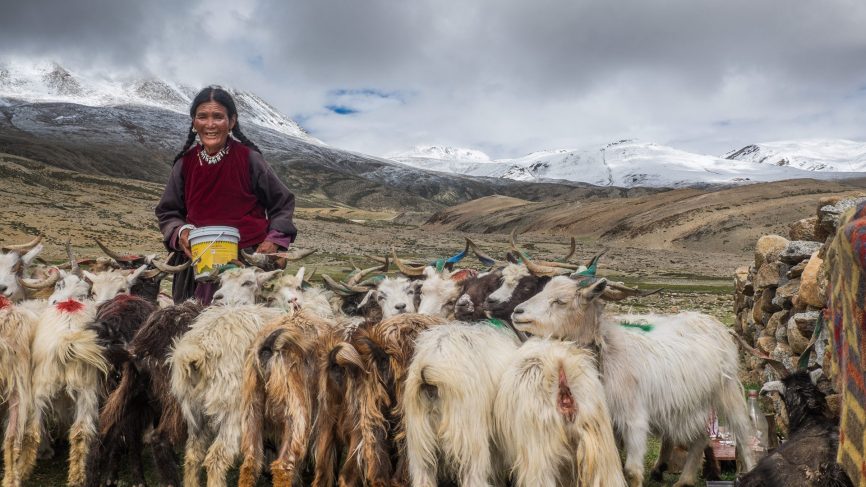
Additionally, nomadism is primarily based on community mobility and involves more people than just oneself. Nomads don’t move from place to place to find the world for themselves, they take their world with them and although nomads travel the world, each step is local and of low impact to the environment. One unique quality of nomads is their innate ability to create comfort for themselves regardless of where they are. One can argue that this is a quality most human beings possess but the matter of fact is that they are required to do it more regularly than others and their livelihood depends on it.
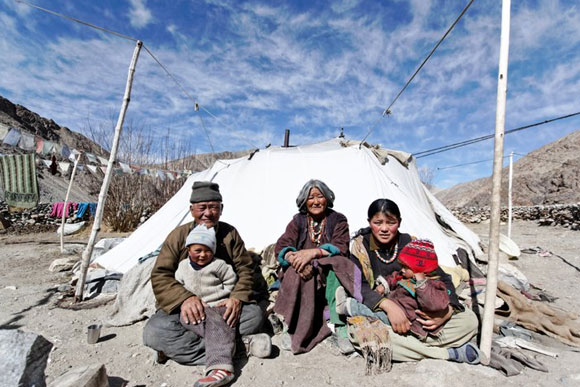
Even though a nomad’s living conditions are transient, they are very calculative in their movements and plan ahead of time. The changpas make cheese and butter to use for the winters and women spend a large amount of time during the day, weaving textiles, rugs and other items of rough use while living in their temporary homes. Men too weave saddlebags, tents and blankets for future use. Although they must be ready to pack and move at any point in time, it doesn’t mean that they do not plan for what comes ahead to the best of their ability. In the eyes of a digital nomad, this fluctuating and unpredictable lifestyle is seen as spontaneous and exciting while for a traditional nomad who is trying to sustain themselves, this uncertainty can be quite challenging since their finances are at stake here. This isn’t to say that the lives of a digital nomad are challenge-free, they face a lot of struggles too. The discourse is in context to the usage of the term nomad that over time, has almost erased the narrative of traditional nomads.
It would, therefore, be interesting to note why the term is accommodative of these different meanings and what does it then, mean to be a nomad, digital or otherwise and what ties them to this lifestyle?
 the girl in the beanie
this was a great blog entry but I have only one thing to say about this that why are you digital nomadism to changpas. another thing is that the changpas don’t do this for the cattle but for their living also
LikeLike